AI Project Manager - Slack-Native Project Operations AssistantA Slack-native AI assistant captures decisions, maintains project documentation, syncs action items, and surfaces risks automatically.
Internal use and early testing showed ~60% less time spent on documentation and status updates.
A Slack-native AI assistant captures decisions, maintains project documentation, syncs action items, and surfaces risks automatically.
Internal use and early testing showed ~60% less time spent on documentation and status updates.

Context

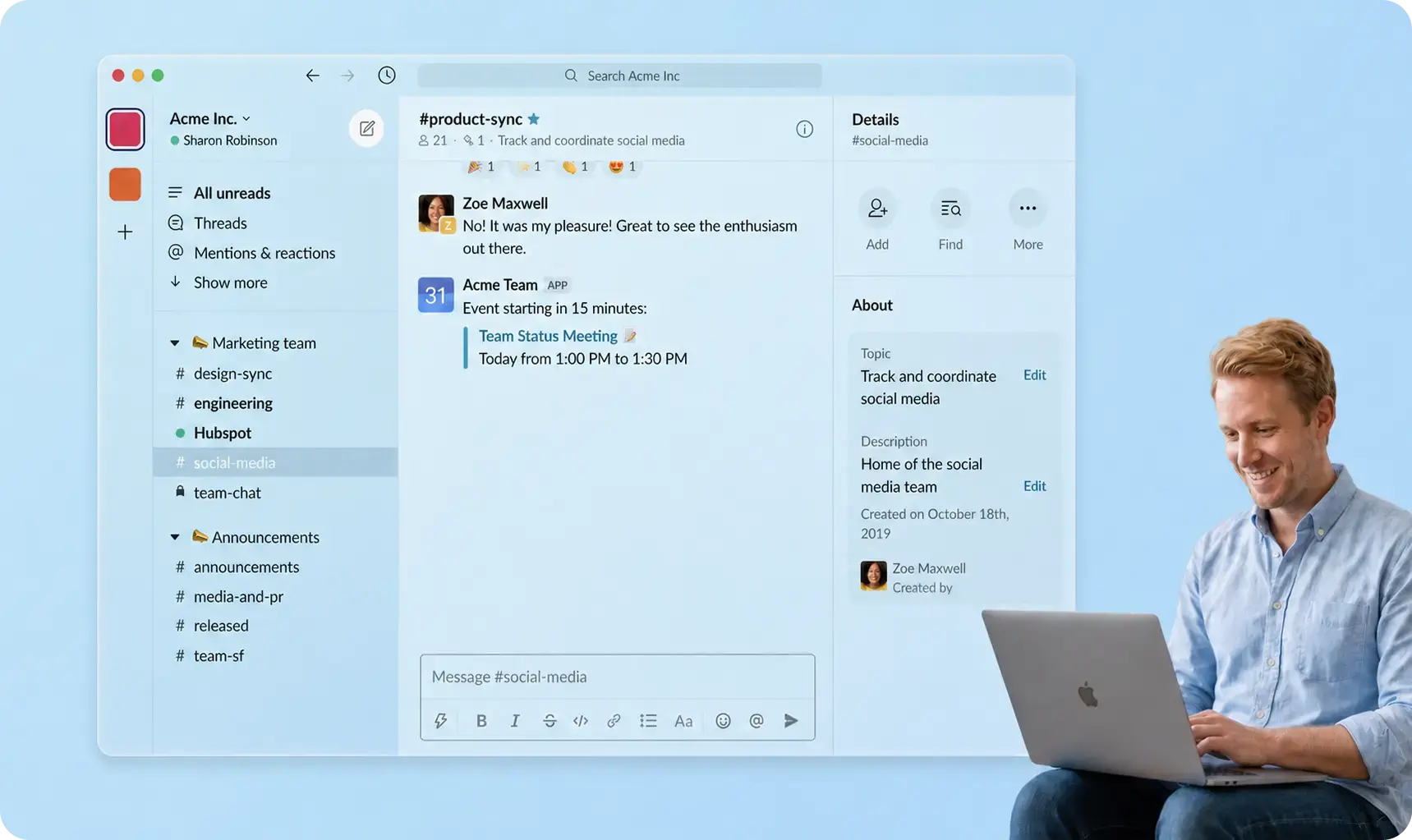
We initially built AI Project Manager for our own product studio, where teams were running 10-12 client projects in parallel. Important decisions lived in Slack, project documentation quickly became outdated, and engineers spent hours turning conversations and meetings into status updates, notes, and tasks.
After a missed handoff cost a client project a full sprint, we stopped trying to patch the process with more manual documentation. Instead, we built a conversational assistant that works inside Slack and automates the operational layer of project management from generating initial project briefs to maintaining documentation, capturing meeting outcomes, syncing tasks, and identifying emerging risks.
ResultsBased on internal use across 3 projects and early testing. Individual results may vary depending on team size and meeting cadence. | Before | After |
|---|---|---|
Documentation & status updates | ~5 hours/week per engineer | ~2 hours/week (~60% reduction) |
Meeting follow-up & task sync | ~40 minutes per meeting | Under 10 minutes per meeting |
Action items missed within 48 hours | ~30% | Near 0% with automatic tracker sync |
New hire ramp-up to first independent contribution | 5-7 days | 2-3 days |
Challenges
Solutions
Important decisions disappeared inside Slack conversations
Engineering decisions were regularly made in threads but rarely transferred into permanent documentation. Weeks later, teams struggled to recover why something had changed, while new team members inherited context gaps.
RAG Over Project History
Instead of asking engineers to manually log every decision, we built a stateful indexing layer using RAG over in-scope conversations and project history. The assistant retrieves relevant context on demand and provides source references so users can verify where an answer came from rather than simply trusting an AI-generated summary.
Project documentation became outdated almost immediately
Briefs were useful at kickoff but quickly diverged from what teams were actually building as requirements, responsibilities, and decisions changed.
Self-Updating Project Documentation
The assistant can generate an initial project brief, scope, and timeline from a few messages and then maintain that context as the project evolves. Decisions, risks, owners, and next steps are incorporated from ongoing conversations and meetings, connecting documentation to where work actually happens.
Meeting follow-up created recurring manual work
After meetings, someone still needed to prepare notes, identify decisions, extract action items, update the task tracker, and notify teammates. This took roughly 40 minutes per meeting and was not always completed consistently.
Automated Meeting-to-Task Workflow
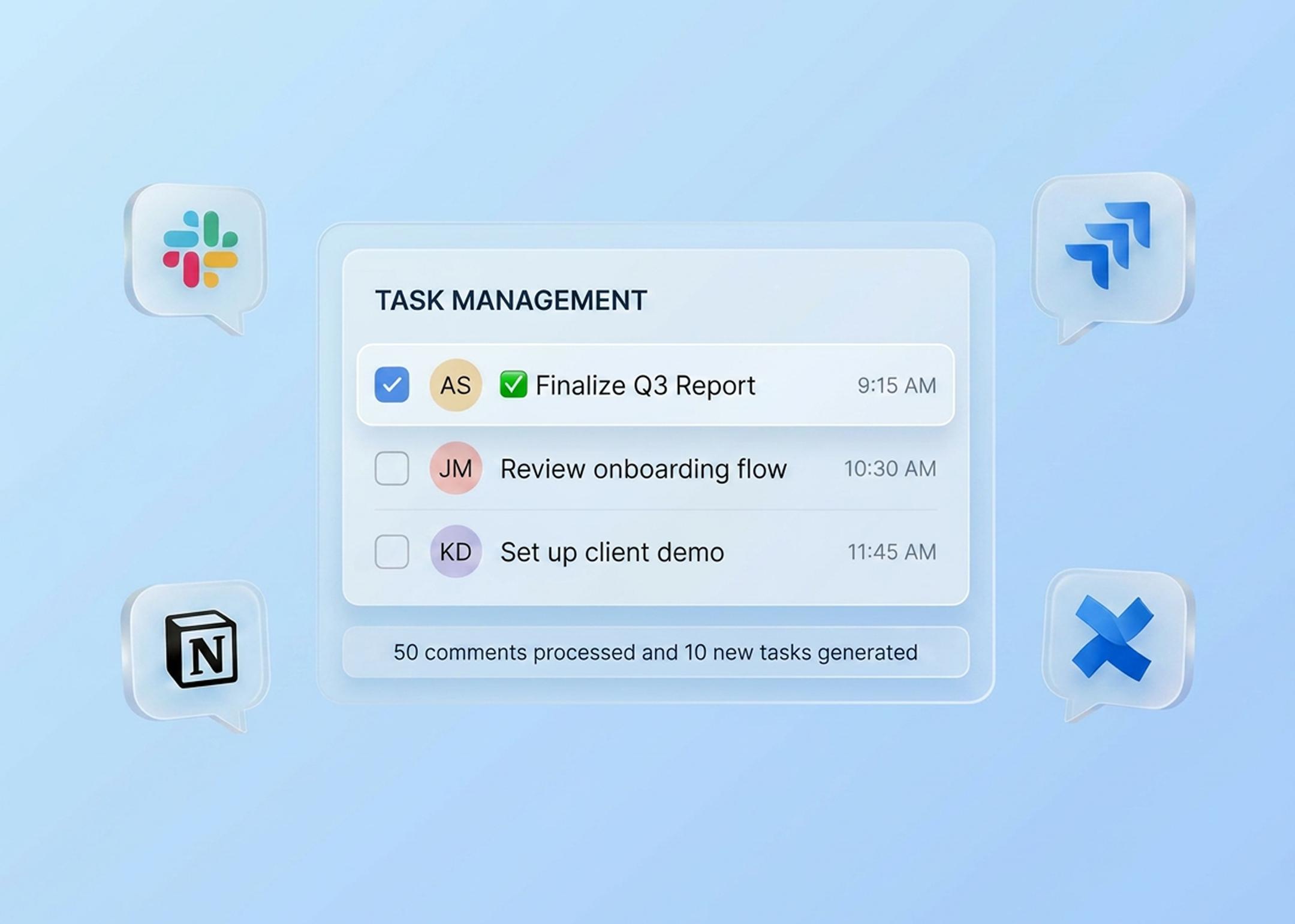
The assistant captures meeting notes, extracts decisions and action items, and synchronizes tasks directly with project trackers. Making the workflow automatic removes the need for someone to manually bridge meetings and execution after every call.
Project risks were visible only after they became blockers
Velocity changes, unresolved questions, and release-readiness signals were distributed across different tools, making them difficult to synthesize early enough to act on.
Proactive Risk Surfacing
The assistant combines available project signals to flag velocity trends, release readiness, and unresolved clarification threads before they develop into larger blockers.
What We Learned Building This
The best workflow automation removes behavior change instead of demanding it
Rather than asking engineers to maintain another system, the assistant works with conversations and project activity already happening in existing tools.
RAG is valuable when traceability matters as much as the answer itself
For project management, a confident but incorrect summary can create false alignment, so answers need to remain connected to verifiable source material.
Project documentation works better when it behaves like a living system
Connecting documentation to ongoing conversations and meetings reduces the gap between the written project state and what teams are actually building.
Automation is most valuable at the boundaries between tools
Meetings, Slack conversations, and task trackers often contain parts of the same workflow; connecting them removes manual handoffs where information is commonly lost.
Using the product ourselves exposed problems that isolated testing would miss
Running the assistant on real client projects allowed architectural and workflow decisions to be tested against actual project-management consequences before offering the system more broadly.
Bring AI Project Operations Into the Tools Your Team Already Uses
Tell us your team size, how you currently track work, and where project information tends to get lost. We’ll show you how an AI project assistant could fit into your existing workflow without adding another layer of manual process.


Our Cases
Innovation isn’t just about ideas - it’s about execution, turning vision into reality, and creating solutions that truly make an impact. See what we’ve built and how it works:
- HealthCare
- Media & Entertainment
- eCommerce
- Amazon Web Services
- Cloud Cost Optimization
- Serverless Application
- Retail
![HealthCare - Banner]()
- 100%HIPAA Compliant
- 99.99% UptimeMaximum Reliability
![HealthCare - Banner]()
- 10,000+Patients supporting
- Engagement 30%+Adaptive UX



- HealthCare
![HealthCare - Banner]()
- 100%HIPAA Compliant
- 99.99% UptimeMaximum Reliability
![HealthCare - Banner]()
- 10,000+Patients supporting
- Engagement 30%+Adaptive UX
- Media & Entertainment
![Product - Banner]()
- 1,000,000+Active Users
- 99.99% UptimeZero Downtime
![Product - Banner]()
- NestJS
- Next.js
- 99.99% UptimeZero Downtime
- Just 2 monthsMVP Delivered
- eCommerce
![E-commerce - Banner]()
- TypeScript
- NestJS
- 5.0 / 5.0 (83)Perfect Rating
- Just 2 monthsLegacy Code Fixed
![Product - Banner]()
- +35% Sales GrowthAfter Launching
- Just 1 monthMVP Delivered
- Amazon Web Services
![HealthCare - Banner]()
- 100%HIPAA Compliant
- 99.99% UptimeMaximum Reliability
![VidPlatform - Banner]()
- Product of the DayProduct Hunt
- Just 3 monthsMVP Delivered
- Cloud Cost Optimization
![Product - Banner]()
- NestJS
- Next.js
- 20,000,000+Active Users
- 99.99% UptimeZero Downtime
![Product - Banner]()
- Reduce $15,000 / monthLower AWS costs
- 99.99% UptimeZero Downtime
- Serverless Application
![Product - Banner]()
- Reduce $15,000 / monthLower AWS costs
- 99.99% UptimeZero Downtime
![Shopify App - Banner]()
- 99.99% UptimeZero Downtime
- Just 3 monthsMVP Delivered
- Retail
![E-commerce - Banner]()
- TypeScript
- NestJS
- 5.0 / 5.0 (83)Perfect Rating
- Just 2 monthsLegacy Code Fixed
![Product - Banner]()
- +35% Sales GrowthAfter Launching
- Just 1 monthMVP Delivered