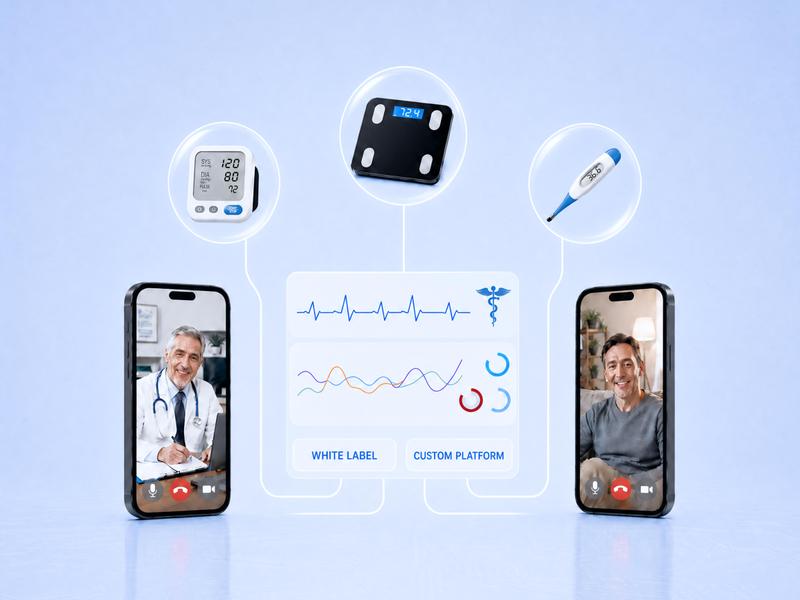

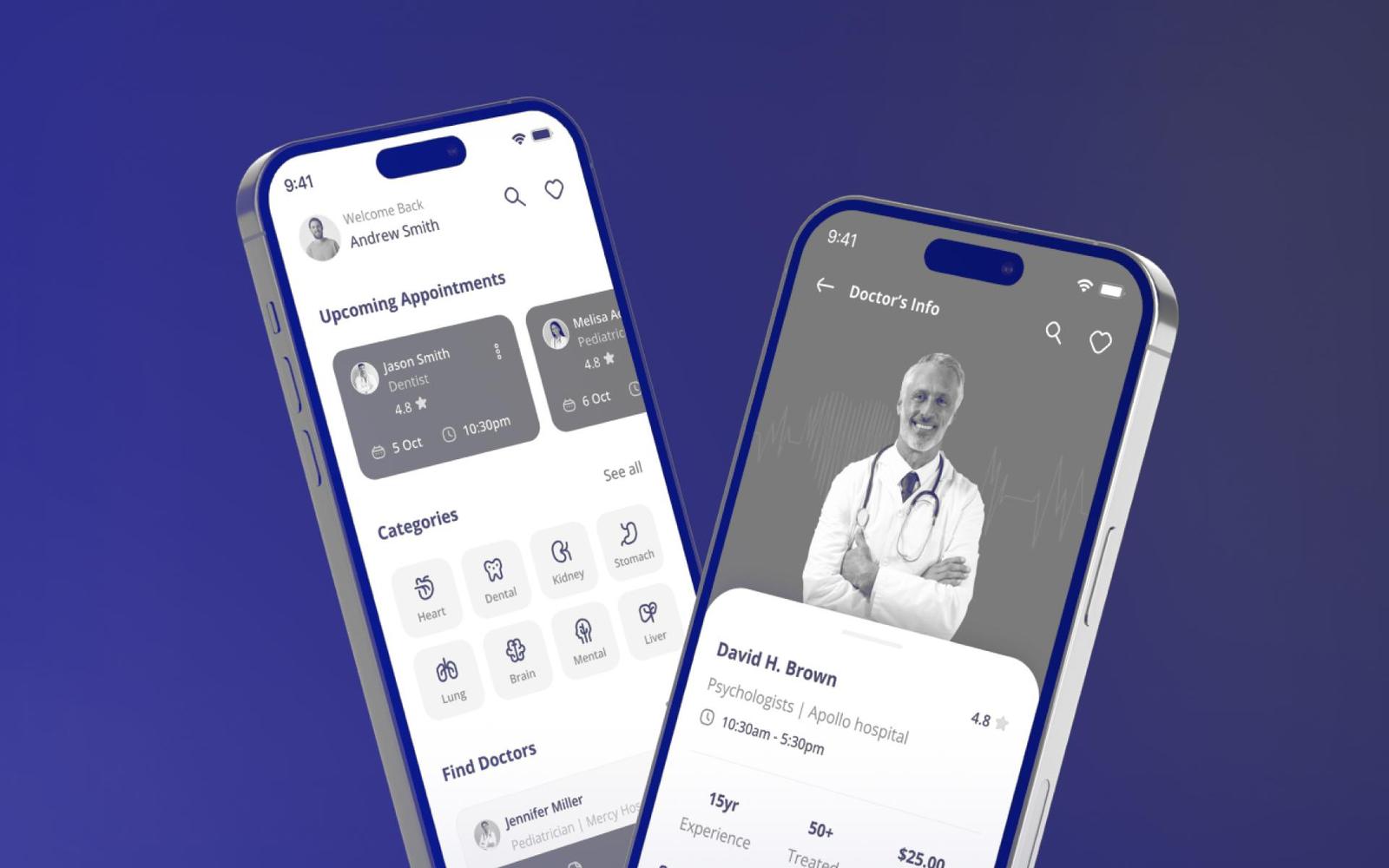
Modern healthcare is constantly advancing, with the latest technology, like AI, to enhance patient care. That’s not surprising, considering that 58.5% of US adults use the Internet to research health information and contact their doctors. Technology and medicine are firmly intertwined now. Therefore, it makes sense to keep improving the field with new apps and solutions.
However, investing in new healthcare app development could be pricey, just like IT compliance in medicine. Today’s guide will use JetBase’s rich experience in the healthcare industry to discuss the typical cost of making a medical application and ways to manage that number. We’ll look at common challenges and how to assess your expected budget correctly.
We hope that this straightforward look at the price of medical development will offer some valuable insight and encourage you to build new solutions that improve patients’ lives. Medical software may require a big investment, but it will pay off well, too. Data shows that the market cap is around $663 billion and is still projected to grow. So let’s see how you can join in on the action.
Key Factors Influencing Healthcare App Development Expenses
Several things significantly influence the budget when creating software, including medical applications. These are the six top factors that affect the healthcare app development cost, with short explanations of how they do, exactly.
1. Project Scope and Complexity
It’s always tempting to go for the most ambitious ideas and fit everything you want into one project. However, just because something sounds good on paper doesn’t mean creating it will be viable for your budget or your team’s capabilities.
While the latter problem is relatively easy to solve with outsourcing, the former is a more serious challenge. Consider keeping the project scope modest and focusing on a specific issue you want to solve with this software. Thus, you minimize expenses while still delivering the desired app.
2. Feature Set: Basic vs. Advanced Functionalities
Similar to the first point, keep in mind that advanced features may be nice but will cost you extra. It’s crucial to do a cost-to-value comparison and decide where it’s worth going above the basics. Also, figure out which functions are better to keep at a standard level.
Sticking to industry standards on general functionality may allow you to spend slightly more on innovative features. It will, in turn, make your app more appealing. Determine these “killer” features, and you’ll know where to divert your expenses.
3. Platform Choice: Android, iOS, or Cross-platform?
When it comes to mobile healthcare app development, consider the factors that set platforms apart, such as the following:
- The overall number of users
- Popularity of a specific platform in your target audience
- The current preferred platform in the ecosystem
Moreover, the platform choice also informs the final project cost. Therefore, you may want to settle for just one of the two typical choices—Android or iOS. However, we recommend going for cross-platform (if your budget is enough to do that). That way, you expand the possible user base, device compatibility, and ease of integration.
4. Regulatory Compliance and Security Measures
Compliance is crucial in the healthcare industry, not just because the fines can be prohibitively high if you mess with HIPAA. Respecting patient privacy and protecting their data is an ethical issue first and foremost, though it’s also plainly good for business. That is why you should find ways to invest in your app’s security and legal compliance efficiently.
The easiest way to do so is to integrate the security measure development with the rest of the project. Meanwhile, you can handle compliance with the help of your in-house legal team. If they don’t have relevant technological experience, ask the vendor to run the checks for you. This is one area where we wouldn’t recommend cutting corners, lest you face regulatory wrath.
5. Integration with IoT and Other Technologies
Modern technologies can improve any app’s value for users with functions like the following:
- Real-time data sync
- Automation
- Precise analytics
- Higher personalization
But, of course, such technologies, namely IoT and AI, will cost a pretty penny. It’s a good idea to consider whether you can accomplish the same goals without using trendy solutions. If impossible, try to make these technologies a selling point or a way to recoup your investment.
6. Development Team Location and Expertise
If you’re going to outsource your healthcare app development, regions are a defining factor in how much you’ll end up spending. Talented developers exist everywhere, so there’s no need to pay extra for a team from Canada when you can get one from Poland. Look at the available vendors, compare rates, and confirm their portfolios.
Regardless of the location, paying extra for an experienced team will likely net a better product and lower your expenses in the long run. Meanwhile, going for the cheapest developers possible could instead incur additional spending when you have to fix their subpar work.
Types of Healthcare Apps and Their Development Costs
Another major factor determining your healthcare app development cost is the choice of app type. After all, there’s a big difference between a high-tech monitoring solution and a simple patient-facing digital health record. So let’s see which type fits your ideas and how it will impact your expenses.
1. Patient Management Applications
Straightforward solutions that let hospitals register, schedule, and serve patients are always welcome in the industry. They don’t tend to be too expensive and, apart from customer service applications, don’t necessarily need cutting-edge technologies. Therefore, they will likely have a budget on the lower end of the spectrum, around $60,000.
Still, just because it’s one of the simpler options doesn’t mean it isn’t essential. Keeping tabs on thousands of patients is challenging for healthcare institutions, and these apps solve that issue. Ideally, they should also improve patient satisfaction and assist with scheduling a hospital’s operations efficiently.
2. Telemedicine Apps
Data shows telemedicine gained a staggering 38x boost in the wake of COVID, making this one of the most prominent medical app types. These solutions connect doctors to patients with the latest video processing technology and may be somewhat expensive. In our experience, a telemedicine app will run about $120,000.
On the flip side, though, they also offer lots of utility, connecting patients from any location to professional doctors providing consultations online. Therefore, they’re also easier to monetize and recoup the development cost, as the potential user base is huge.
3. Fitness and Wellness Apps
Fitness apps are a pretty healthy market at $10.59 billion, and the rise of AI personalization is sure to help. The ability to set tailored workout plans that consider the user’s weight, medical history, and physical limitations makes such apps more effective.
Hence, when paired with the latest technology, a mobile wellness app may be a great investment, even if it costs around $90,000. In this case, a good chunk of the budget will go to the design and the integration of the latest technologies.
4. Mental Health and Teletherapy Solutions
Another type of medical app that boomed during COVID, mental health solutions help people address their anxieties and problems without leaving their homes. As many of them use video calls for doctor-patient communication, they’re similar to telemedicine apps. So, their average cost is around $120,000.
These also have crossover with wellness solutions, as yoga and meditation apps fit both categories. Either way, the healthcare app development cost for these is reasonable, considering such products’ soaring popularity and likelihood of success.
5. Nutrition and Health Monitoring Apps
Dieting is more than a fad, as we can see from the $308.7 million market cap for nutrition apps. Sure, it’s not as high as fitness solutions. Nevertheless, a tool to track one’s fitness and health history is still a universally handy product. To make it up to the market standards, though, you’ll need flawless real-time data sync, possibly some AI analytics, and good data visualization.
That pushes the cost of such an app to $100,000, which some may find prohibitive. However, like telemedicine solutions, one can monetize these efficiently and make back the development cost.
| App type | Estimated cost | Development time |
|---|---|---|
| Patient management | $50,000 — $80,000 | 12–20 weeks |
| Telemedicine | $100,00 — $160,000 | 24–40 weeks |
| Fitness and wellness | $90,000 — $115,000 | 16–24 weeks |
| Mental health and teletherapy | $90,000 — $160,000 | 16–40 weeks |
| Nutrition and health | $100,000 — $140,000 | 24–28 weeks |
Estimating Healthcare App Development Costs: A Step-by-Step Guide
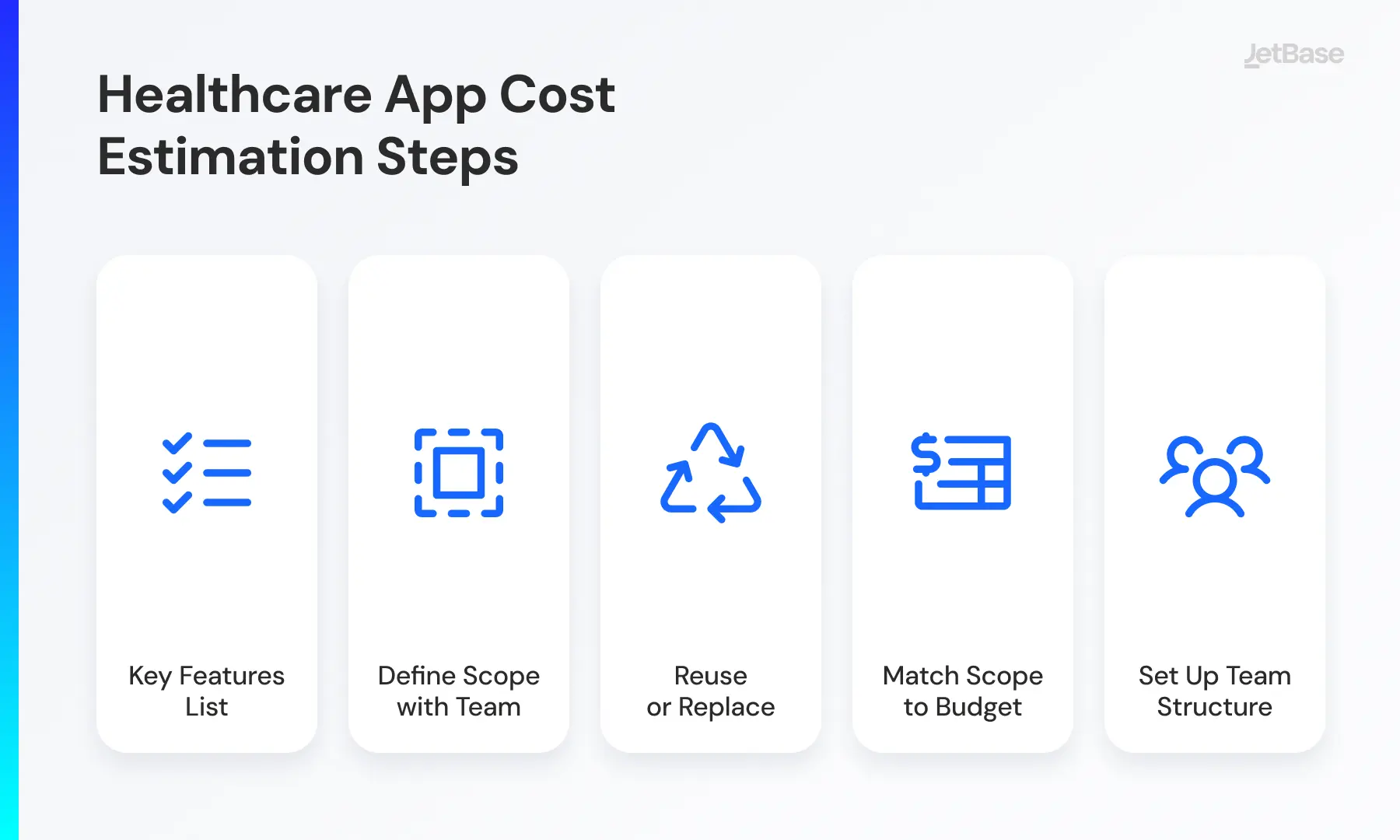
Regardless of which software type you choose for healthcare app development, the cost examples we’ve shown are just that examples. To assess your budget, follow these simple steps and determine your app’s cost.
Also, it’s time to find areas for adjustment and introduce expense cuts that will ultimately save you money while not affecting the quality of your product much. It’s easiest at this stage as you’re only preparing to start development while already seeing the process breakdown.
1. Write Down the Full List of Features
Start by listing out all the features you want your app to have. But don’t stop there break them down into categories:
- Must-have – critical functionality needed for the app to work at all
- Important – high-value features that improve usability or outcomes
- Nice-to-have features that would be great, but not essential for version 1
This prioritization will help you make fast decisions when it comes to budget cuts or MVP planning.
2. Review the Scope with Your Technical Team
Sit down with developers, designers, and product owners to translate your feature list into an actual scope. At this stage, your team can identify:
- Which features are complex and require more development hours
- Which ideas might be risky or unclear from a tech standpoint
- Whether any functionality is redundant or overlapping
This conversation often leads to meaningful simplification and cost reduction.
3. Identify What Can Be Reused or Replaced
Now that you understand what needs to be built from scratch, ask yourself:
- Can we use a third-party tool for this?
- Is there a low-code solution or open-source module that fits our needs?
- Can this feature wait for a future version?
This is where smart trade-offs can save tens of thousands of dollars, without impacting product quality.
4. Align Scope with Timeline and Budget
With scope and priorities clarified, it’s time to match them against two key constraints:
your time-to-market expectations and your budget ceiling.
If the timeline is tight or budget is limited, you’ll need to trim features, adjust team size, or simplify architecture. This isn’t about cutting corners; it’s about making intentional choices early, before they become costly mistakes later.
5. Build the Right Team Structure
Once you know what needs to be built and when, you can structure your team accordingly. A typical healthcare app team includes:
- A project manager
- A UI/UX designer
- One or two engineers (frontend/backend)
- A QA specialist
For more complex projects, it’s worth considering the addition of specialists such as DevOps engineers, security professionals, or data scientists. However, it’s important to keep in mind that a larger team doesn’t automatically mean faster results. In fact, smaller, well-structured teams often work more efficiently, particularly during the MVP stage.
Typical Budget Breakdown by Development Phase
Once the team and scope are aligned, it’s time to map your total cost against the typical phases of development. Here’s how budgets usually break down in practice:
| Stage | Percentage of total | Monetary value |
|---|---|---|
| Planning | 5% | $5,000 |
| Design | 25% | $25,000 |
| Development | 40% | $40,000 |
| QA | 20% | $20,000 |
| Support | 20% | $20,000 |
As you can see, development is the most cost-heavy part of the process, which makes sense. Some companies balk at high support expenses. But they usually include years of maintenance and updates. Without them, you simply launch a product and have to leave it as is, which isn’t a favorable position at all.
We advise looking for ways to minimize design expenses by doing sufficient prep work and settling on the final iterations quickly. After all, the more variations and edits your designer has to do, the higher the final cost.
Strategies for Reducing Healthcare App Development Costs
Now that we’ve discussed the factors that assess the app cost and ways to estimate it, it’s high time to discuss ways to limit your expenses. Contrary to what some may expect, this doesn’t necessarily mean limiting your app’s functionality or compromising on your ideas.
1. Embrace Agile Methodologies for Flexibility
The best way to ensure your healthcare app development cost stays moderate is to make the development itself more efficient. That’s why adopting Agile to strip away the “fluff” and focus on creating the app will pay off in the end. Have your team prioritize delivery and adapt on the fly to deliver the product faster while reducing the final cost substantially.
Of course, this works best if your team is already trained to work with these methodologies. Otherwise, the time you spend retooling your internal processes could result in a net negative result. The alternative is to turn to an outsourcing team that runs development with an Agile approach, such as JetBase.
2. Focus on Building a Minimum Viable Product (MVP)
Instead of trying to create the final, perfect version from the get-go, consider going for an MVP build first. It will still show off your app’s utility and value without costing as much to build and taking as long to launch.
Create an MVP to avoid implementing costly extraneous functionality. Instead, make the app market-tested first and return some of the money you put into it. This way, you will verify your ideas and recoup some of the healthcare app development cost.
3. Outsourcing Development for Cost Efficiency
As we’ve pointed out above, sometimes handing the project over to an outsourcing team is the right call. For one, they may have a toolset that makes development less costly without sacrificing quality. As for hourly rates, they depend on the team’s region and could be far lower than local developers in your area.
Then there’s the question of experience, as vendors work with hundreds of clients and likely have relevant expertise for your project. Medical software should be finely tuned to follow regulations and match patients’ needs, so relevant knowledge is highly valuable here.
4. Reuse Code and Use Pre-built Solutions
Years of ambitious projects and open-source software have left a plentiful trove of code and tools you can rely on for your creations. While you should pay attention to licensing rules, most of these freely available helpers can enhance and speed up your work.
Reusing pre-tested code also lets you spend less time testing and rewriting code to eliminate minor issues. We don’t advocate for building your whole app out of pre-made code, eliminating the point of healthcare app development. But using parts that match your needs is a worthy cost-saving tip.
5. Continuous Testing to Avoid Cost Overruns
Set up protocols for automated testing to catch issues early before they snowball into expensive errors. Plus, it makes the whole working process more efficient, creating a DevOps-adjacent environment to enhance the speed of delivery.
Manual tests are also critical, as relying fully on automated testing may result in minor bugs sneaking through. A double verification process won’t impact healthcare app development cost too heavily. However, it will certainly improve app quality.

Real-World Examples of Healthcare App Development Costs
Using our years in the industry, we’ll compile some data from real medical projects. Hopefully, it will give you an overview of the average healthcare app development cost. While we provided our own estimates above, this is a breakdown specifically concerned with what vendors offer.
As a result, you’ll be able to gauge whether the price quoted for your project is fair and realistic. First, let’s take a breakdown based on app complexity:
| App Complexity | Total Cost Estimate |
|---|---|
| Basic App (MVP) | $60,000 – $100,000 |
| Mid-Level App | $120,000 – $200,000 |
| Complex App (e.g., EHR-integrated) | $250,000 – $500,000+ |
Now, let’s break these down by stage, using the complex app as a benchmark.
| Development Stage | Estimated Cost Range |
|---|---|
| Planning & Research | $5,000 – $20,000 |
| UI/UX Design | $7,000 – $25,000 |
| Development | $40,000 – $150,000 |
| Compliance & Security | $15,000 – $50,000 |
| Third-Party Integrations | $10,000 – $60,000 |
| QA & Testing | $10,000 – $40,000 |
| Deployment & Launch | $2,000 – $10,000 |
| Maintenance (first year) | $60,000 – $180,000 |
The rate fluctuates a fair bit. As we’ve pointed out, MVP is an excellent way to have your app without breaking the bank. Otherwise, you’re looking at six-figure costs even for a pretty straightforward solution, though this is using data from top-shelf developers. If you find a team with more affordable rates and budget properly, you’ll likely keep things more manageable.
Common Mistakes to Avoid When Estimating Healthcare App Development Costs
Another decent way to keep the cost of your application manageable is to work around the challenges that typically befall such projects. Doing so is easier when familiar with them, so here is a quick breakdown.
Underestimating the Complexity of Healthcare Regulations
We’ve already mentioned the importance of regulations to development, but they’re just as crucial for the healthcare app development cost. Not treating them as a serious concern will inevitably result in more expenses for testing, fixes, and fines.
Consult with legal experts to guarantee you’re not making any mistakes regarding regulatory limitations. Their assistance will save you a massive headache later on, and hopefully prevent unwanted expenses associated with retooling an app to fit the regulatory concerns.
Overlooking Post-Launch Maintenance and Updates
There’s a reason we mentioned support and maintenance as an integral part of app costs in a previous section. Once your app is out in the world, it will inevitably start receiving customer feedback. Historically, not all of it will be positive. That leads to you needing to release updates, new features, and bug fixes.
This post-release work will require a substantial investment and more work on the developers’ part. It may be outside of your budget if you don’t account for it early on. Therefore, we always suggest baking the maintenance cost into the initial estimates for your app development.
Misjudging the Technology Stack and Its Impact on Costs
A huge component of the final healthcare app development cost is the initial decision on the product’s architecture. Certain technologies are simply more cost-efficient than others, in that they’re optimized to use fewer resources, perhaps at the cost of development complexity. Calculating their usability and deciding which is the right choice for you will have an impact down the line.
Similarly, you may think that banking on AI is a guaranteed positive nowadays when it’s trendy and useful. But that won’t always be the case. The cost of implementing AI-powered features and training algorithms could well outweigh the benefit you get from the technology. Therefore, always consider both the pros and cons of the choices made for your stack.
Ignoring the Importance of UX/UI Design in Development
Another component we included in our healthcare app development cost breakdown is design, which is essential in mobile apps. Not just design, of course, but good, well-planned UI/UX design that users can give positive feedback about. It significantly impacts your app’s perception and helps with post-launch monetization efforts.
Follow our earlier tips and take an iterative approach, finding the optimal design choices for your app and target audience. Thus, you’ll build a memorable brand image, ensure your app’s high usability, and support your features with an appealing look.
Healthcare App Development with Jetbase
As you can see, healthcare app development cost doesn’t have to be exorbitantly high, especially when you approach the project with structure and the right toolset. But, as we have stressed multiple times, what matters most is your team choice. A set of expert developers will always end up more cost-efficient than newbies, who could harm the quality of your product.
That is why there’s no better choice to create your healthcare app than JetBase. We’re a team that has spent over a decade exploring custom software development and technologies, both new and classic. Our portfolio includes multiple healthcare applications (like the telemedicine app, medical care app, etc.), so we know how to approach this work with a cost-effective focus firsthand.
So if you want a top-shelf custom medical app, send us a message, and let’s begin with a consultation.