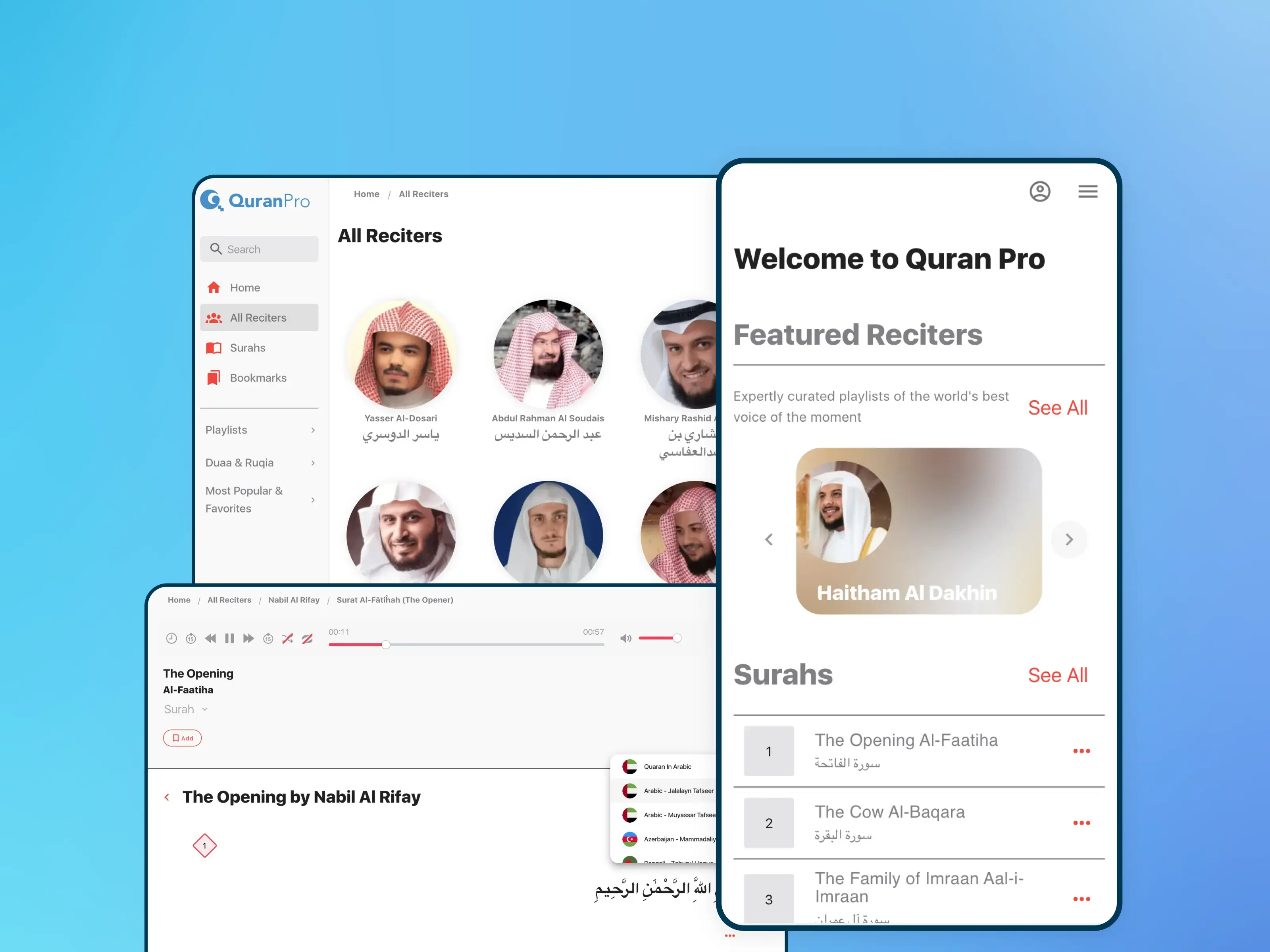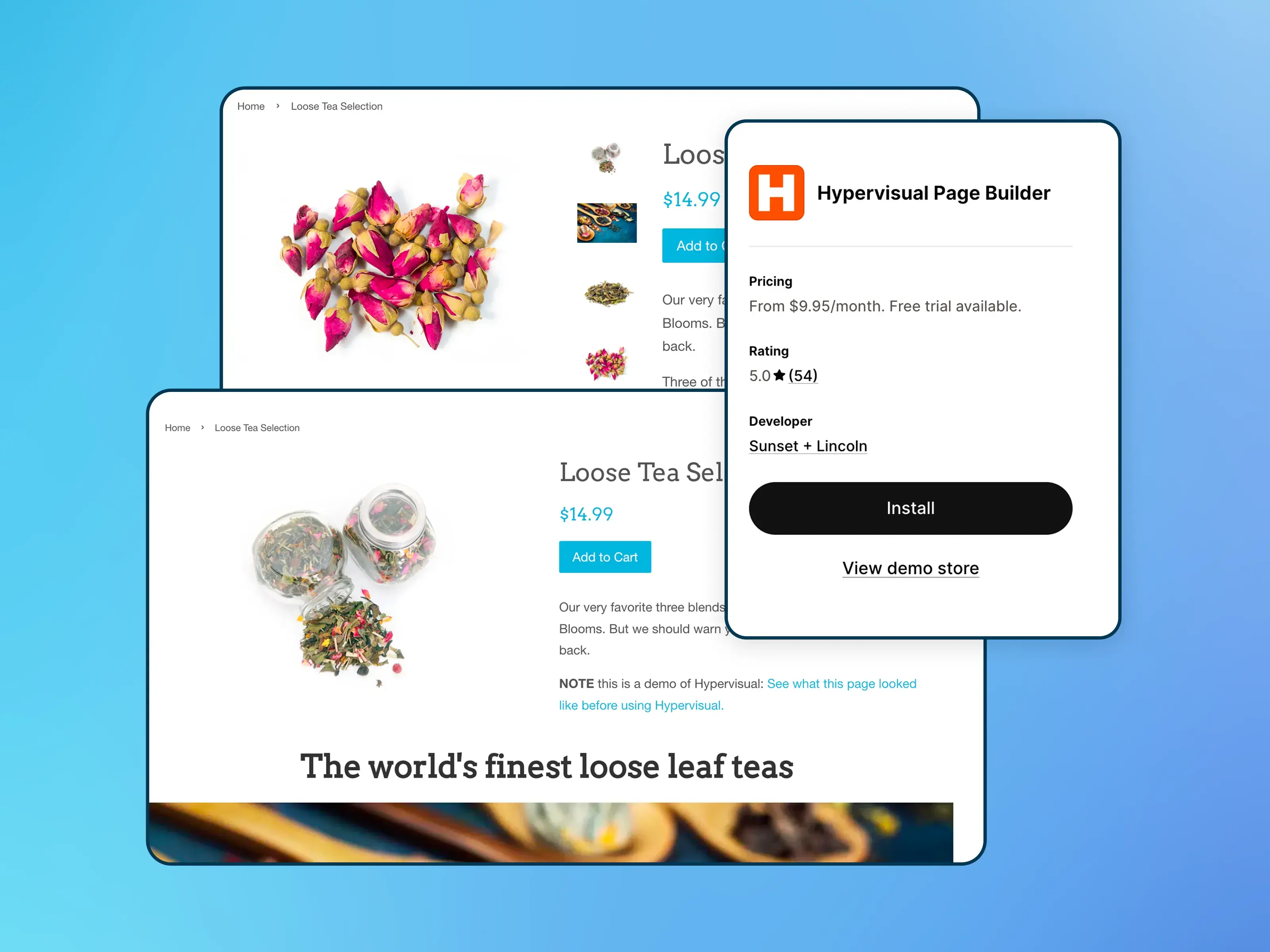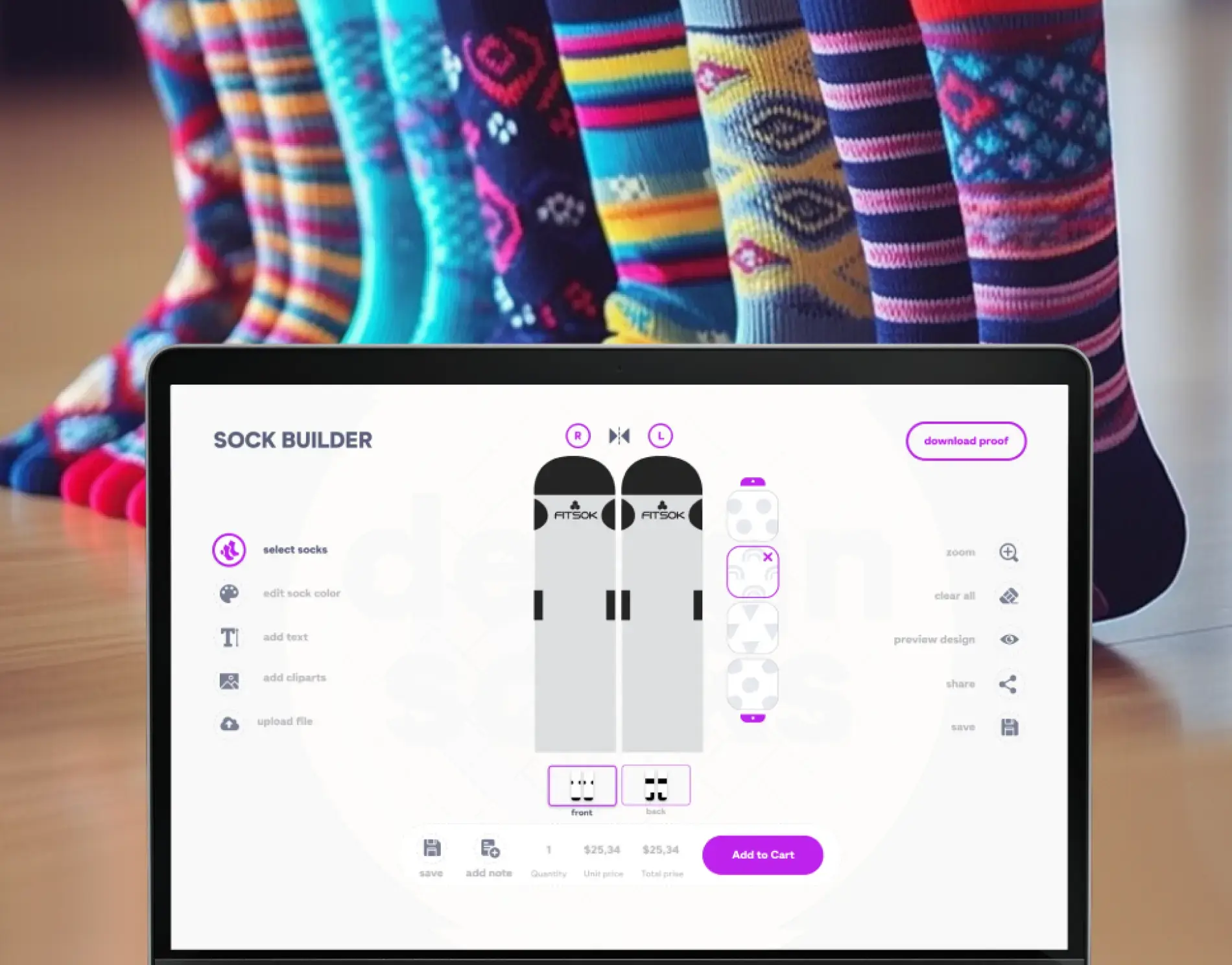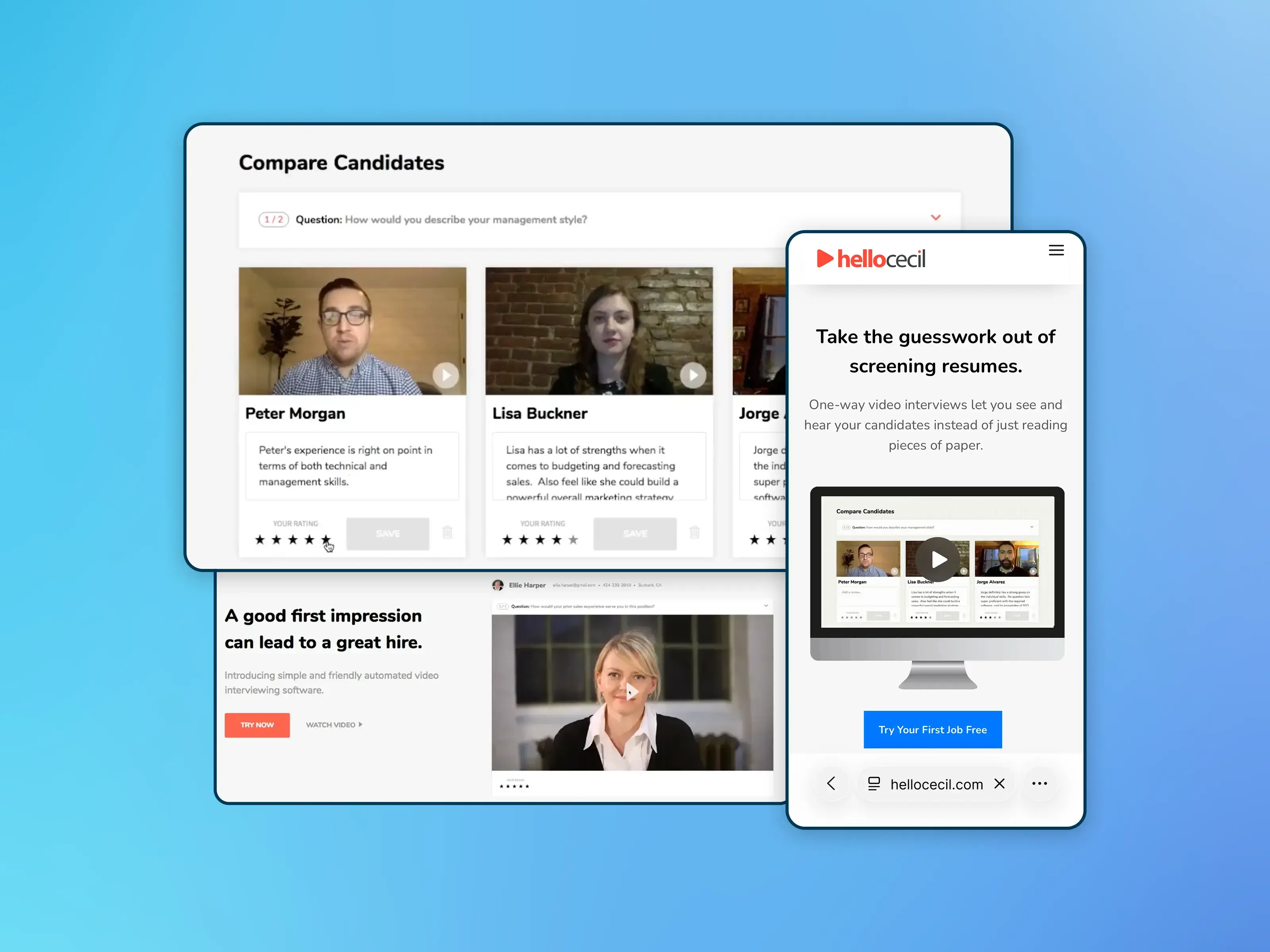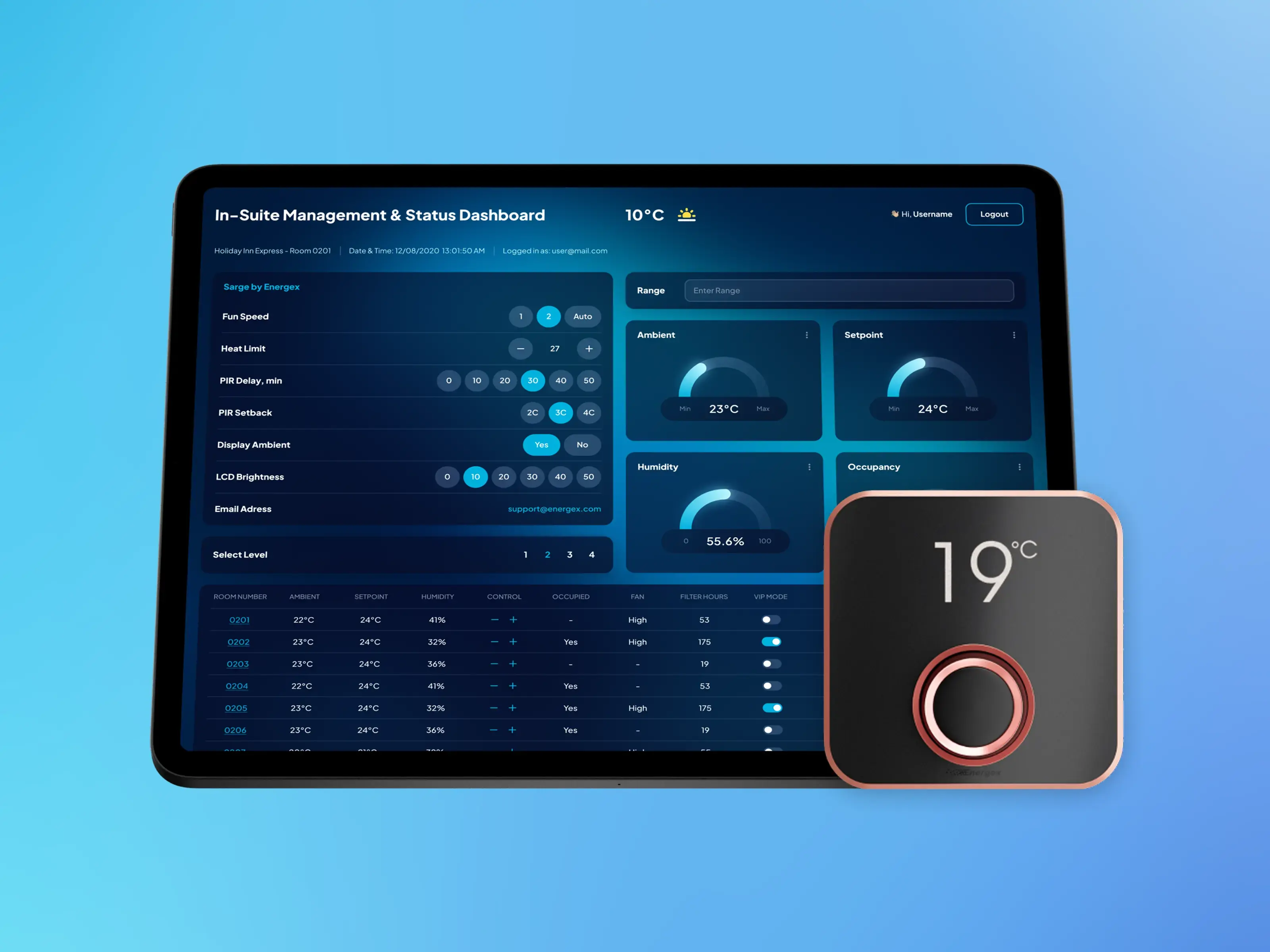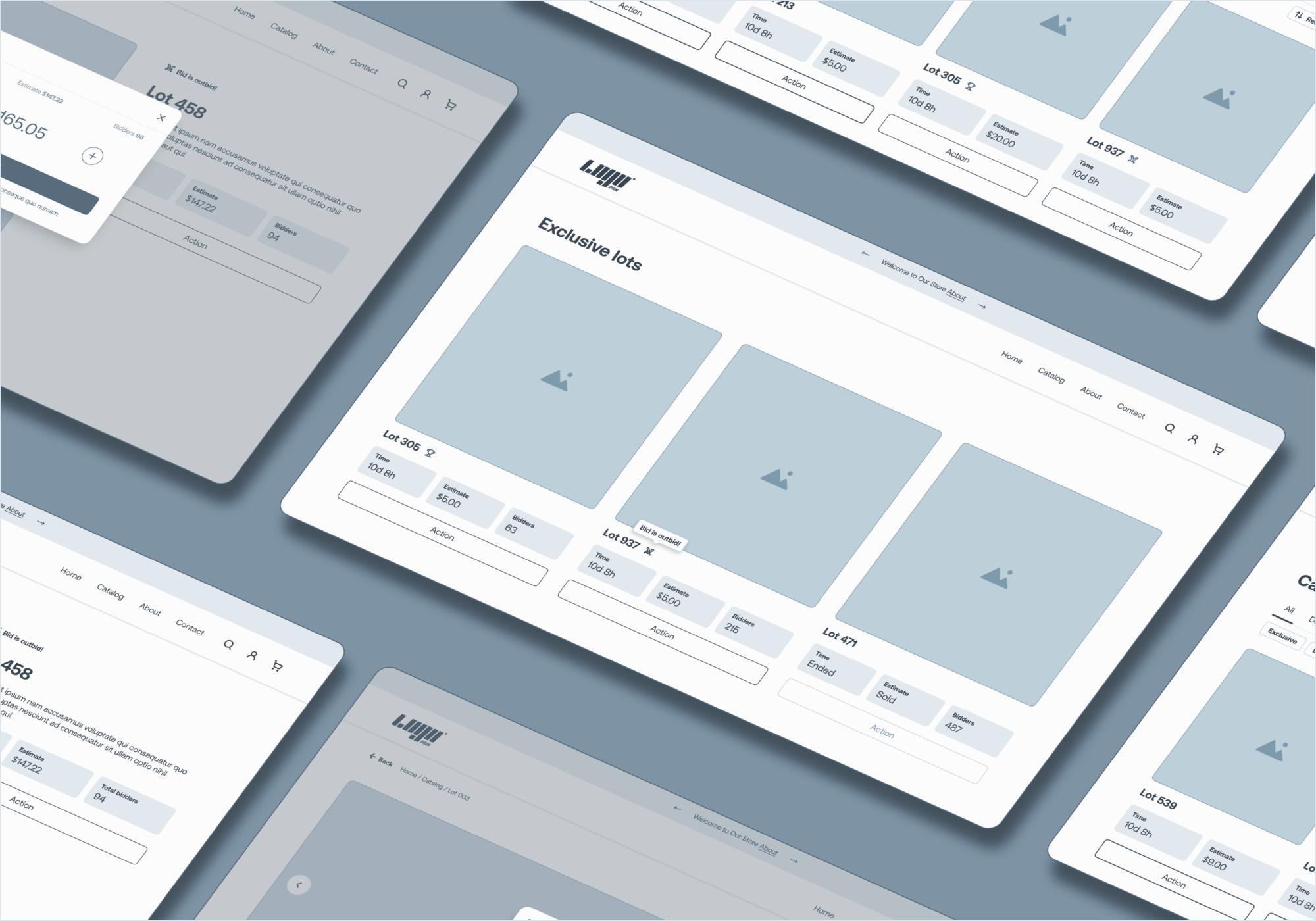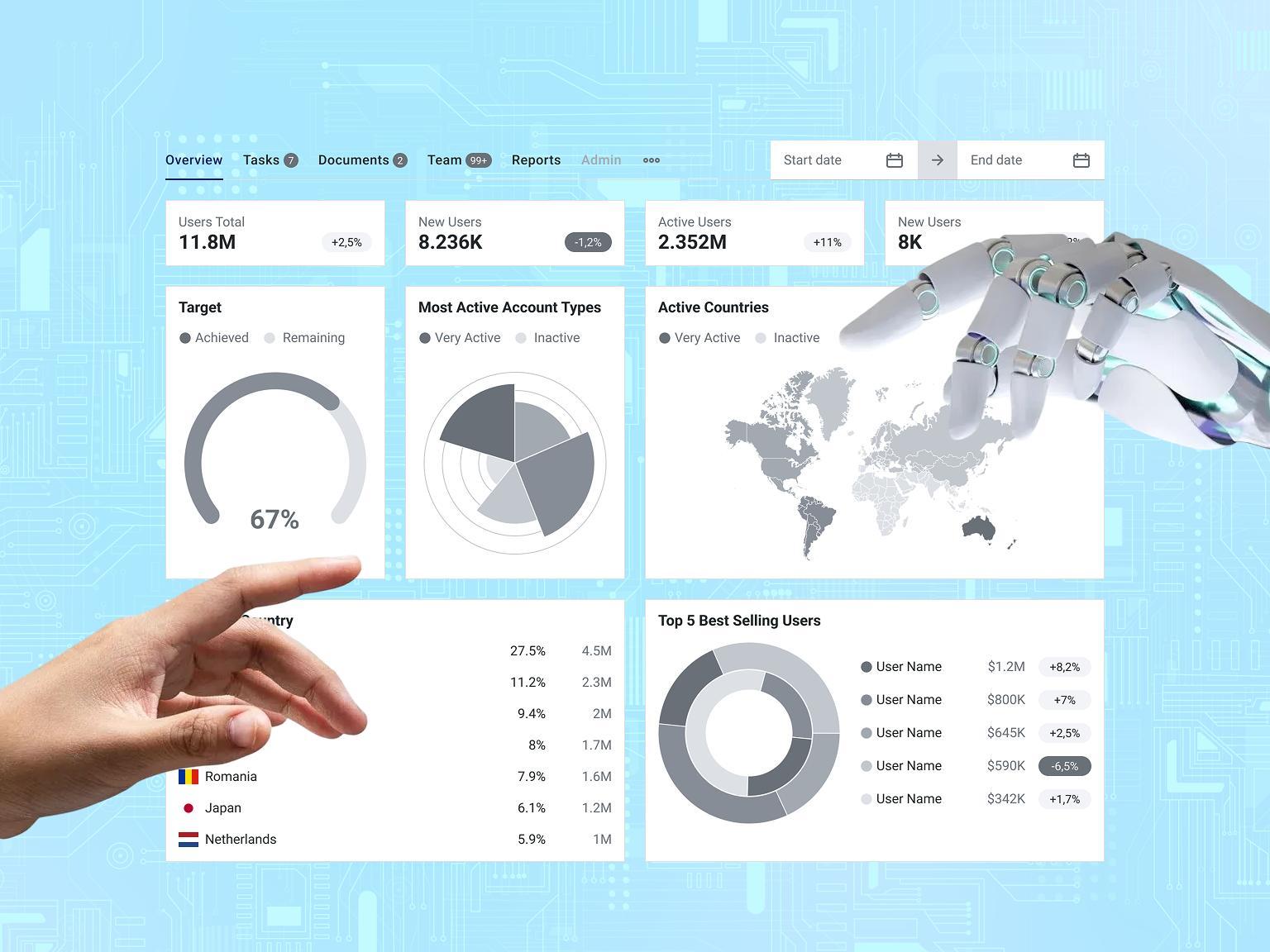


Any modern healthcare institution must use technological advancements to deliver better patient services. This can mean new medical devices, resilient cloud architecture, or the use of healthcare SaaS, our subject for this article. These solutions can help with operational efficiency, patient management, and high-tier healthcare services.
However, healthcare SaaS can take on many forms, and introducing it into a medical company’s ecosystem can be tricky. This is why JetBase will call on our decade-plus of experience to give you all you need to know about SaaS in healthcare. From benefits to categorization to future trends, we’ll provide a full primer on the industry.
What is Healthcare SaaS?
For one, it’s a booming industry worth $34.84 billion in 2024 and projected to reach $94.56 billion by 2034. But if we’re talking about a plain definition, it’s pretty much any healthcare software that runs on the cloud and is owned by a third party. As with any industry, healthcare SaaS should come with some features aimed specifically at medical institutions and their operations.
So when you pay for healthcare SaaS, you may be getting:
- A patient management system
- A solution for EHR storage and processing
- Telemedicine solutions
- Decision-making software
- Medical portal solutions
This means SaaS can serve as a patient-facing product or one that only staff uses for internal purposes, covering various applications. It can also range from sprawling systems to simple, single-purpose solutions. What all of these healthcare SaaS variations have in common, though, is that they deliver unique benefits to the users. Let’s talk about those.
What are the Advantages of SaaS Solutions for Healthcare Providers?
No company wants to pay for software that doesn’t solve their problems or bring them value. Thankfully, that shouldn't be an issue when working with SaaS for healthcare. Here’s a list of some of its benefits.
Improving Efficiency and Simplifying Workflows
Using custom solutions, you can ensure that documentation is processed faster, patients are registered without any errors, and staff scheduling is simplified. When set up properly, healthcare SaaS can automate a lot of day-to-day operations that take up excess time. This way, SaaS can make your business more efficient and easier to run.
Enabling Scalable and Cost-Effective Solutions
Working with thousands of patients and running multiple hospital departments or branches is no easy feat. In addition to complex management, it also demands a lot of resources and efficient use. With the right SaaS healthcare solution, you can ensure that your hardware and storage deliver more, building load-resistant infrastructure that supports growth.
Enhancing Data Security and Compliance
Regulatory compliance is crucial in the healthcare industry, as there is no shortage of complaints being registered with the HHS. Using healthcare SaaS, medical businesses can establish pipelines to encrypt patient data and store it securely with limited access. This guarantees that a medical business never gets into trouble with medical legislation.
Offering Real-Time Updates and Accessibility
Doctors can make more informed decisions and provide better care when they have up-to-date information, down to the minute. That’s why it makes sense to use healthcare SaaS to set up data streams that instantly share updates between departments and standardize data. This speeds up data entry on the doctors’ part and guarantees they’re always working with the full information.
Simplifying Data Backup and Recovery
Any medical business ends up amassing huge amounts of patient records and operational data, much of which is sensitive and has to be stored for long-term access. In order to ensure that it’s always safe, you can use SaaS in healthcare to build vast, reliable backups. Establishing automatic disaster recovery protocols guaranteeing fast problem-solving is also possible.
Comprehensive Checklist for Ensuring HIPAA Compliance
Although healthcare SaaS helps keep your business compliant, it’s not as simple as pushing a button. This section will cover ways to make sure you’re staying HIPAA compliant in your operations and when using your SaaS.
Understanding HIPAA Requirements for Healthcare SaaS
HIPAA has the same rules for SaaS for healthcare as it does for anything that operates with medical data. It’s on those handling patient information to provide its security and privacy, as well as notify patients of any breaches. These are the three “golden rules” that medical businesses have to follow if they want to stay HIPAA-compliant and avoid the pretty hefty fines.
Best Practices for Maintaining Data Security and Privacy
So, how does a medical SaaS protect patient data? One core feature is access authorization with a role-based system, which allows doctors to see and control only relevant information. Similarly, it’s important to give patients the tools to control their own data, including the ability to view and copy it and request that it be deleted.
Regular Audits and Risk Assessments
Even if you take the time to implement measures initially, requesting and holding security audits is equally important, as it helps spot unforeseen gaps in your healthcare SaaS. Then, it’s up to your team to patch them, as well as run analytics to assess the risks your business faces. If done correctly, you should have no issues providing long-standing and full security for patient data.
Ensuring Encryption and Secure Data Storage
Lastly, any sensitive data must be encrypted with reliable, industry-standard protocols, both at rest and in transit. It should also be stored separately from generally accessible data, and only those with proper authorization should be able to view it. In fact, it’s a good idea to have time-limited access with role separations. Otherwise, you risk contributing to the list of over 10 billion records compromised in breaches.
Core Characteristics of Healthcare SaaS Solutions
Though we’ve discussed how varied healthcare SaaS can be, it does tend to have some common features that companies should be aware of. Here are just some of them.
Streamlined Subscription Billing for Healthcare Providers
A hospital using healthcare SaaS will likely be paying for several instances to cover departments and branches. Even so, these payments are a drop in the ocean when you consider how many transactions a hospital’s financial department makes daily. That’s why a quality SaaS makes subscriptions easy with clear, standardized billing.
It may seem like a small detail, but minimizing the time spent on SaaS subscription management means the client doesn’t feel slowed down at all. Offering as much convenience as possible enhances the software’s value.
Robust Data Analytics Capabilities
Medical staff have to make life-and-death decisions every day, while hospital managerial staff need hard data to understand the financial viability of certain services and procedures. This is why a SaaS for a medical institution must have powerful analytical features that can drive decision-making.
Refining the analytical algorithms and forecasting features means offering users more insight into the future and letting them minimize risks. The latter is obviously crucial for a hospital, where making the wrong choice could lead to tragic consequences. Good healthcare SaaS takes that into account, delivering top-notch analytical capabilities that traditional methods don’t bring.
Multi-Tenant Architecture for Efficient Resource Management
As we’ve mentioned before, healthcare SaaS will have multiple user instances, each with their own needs and usage patterns. Employing a multi-tenant architecture ensures these users are isolated in terms of data and setup while sharing the same resources. Thus, the load is evenly distributed while each instance remains independent.
This is particularly valuable in healthcare, as it allows departments to keep patient data separate, ensuring full regulatory compliance and security. Having separate databases per tenant means doctors can only access data that should be open to them. When implemented correctly, this removes any chance of a privacy breach.
Scalable and Reliable Infrastructure for Future Growth
Healthcare SaaS can provide medical institutions with plentiful resources to nurture their growth in the digital space. Cloud-based software should guarantee nearly perfect uptime with top-notch load resistance, a vital aspect for healthcare where software failure could be very dangerous. It also provides enough space to host and manage massive databases with little to no slowdown.
This makes SaaS the perfect choice for hospital networks and medical institutions that need a lot of resources to run analytics and research. It could be the exact missing element required for companies crafting new medical devices and producing drugs. Building that kind of infrastructure on-premise would require a massive investment in hardware and maintenance. Whereas SaaS makes it available to everyone at a fraction of the cost.
High-Level Security Features for Data Protection
Aside from keeping databases separate through a multi-tenant architecture, SaaS offers a plethora of other ways to safeguard user information. It incentivizes companies to store data with easy cloud access but doesn’t impede encryption or role-based authorization. These two are among the most common security practices that any healthcare company can apply.
SaaS, being a cloud product with a provider behind it, also guarantees that data is backed up and easy to recover in case of an unforeseen accident. This is incredibly important for patient data, which may include years of medical history.
Types of SaaS in Healthcare
We already talked about what kind of software you can get in SaaS form, but it’s equally important to discuss ways in which SaaS as a format can change. This includes things like:
- Technological core
- Payment type
- Cloud architecture
So, in this section, we’ll address the variety that SaaS can bring to the table.
Vertical SaaS Solutions Tailored to Healthcare
Vertical here simply means that a specific piece of software was designed for a specific use case or field. So, vertical healthcare SaaS would just be a solution that was made for the medical industry. The advantage of this approach is that these products account for all details of the niche, such as regulatory compliance and compatibility with industry-standard software.
Using these allows companies to integrate SaaS quicker and smoother, as well as get unique features that general SaaS simply might not offer. This type may include EHR management platforms, patient portals, or even telemedicine software. So, if you seek highly specialized solutions, vertical may just be the way to go.
Subscription-Based Models and Pay-Per-Use Options
This isn’t unique to healthcare SaaS but rather to the SaaS format in general. For a while, this model meant a long-term subscription, where the user paid once every certain period. However, depending on the software, it might make sense to try a different approach, such as the pay-per-use model.
While it doesn’t necessarily make sense for software that has to be used thousands of times a month, it could be a good economic choice for those who only access it occasionally. There’s also the choice between flat-rate pay or tiered levels, where your pricing may rise based on how many resources you use and how often. Such models allow for easy scaling, but it’s always important to calculate the cost to confirm you’ll come out on top.
Artificial Intelligence in Healthcare SaaS
We’ll also touch upon this in our section on trends in healthcare SaaS, but AI is obviously a major driving force in today’s tech industry. For medicine, it can guarantee faster data processing, automate certain minute operations, and strengthen the connection between devices.
This makes it a valuable tool when used correctly. However, AI also comes with a price tag, especially now that it’s a big trend. That means you will be spending extra if you want the latest, most high-quality algorithm in your SaaS.
Multi-Cloud Strategy for Secure and Scalable Solutions
Those opting for the multi-cloud approach can have a few different reasons:
- Fear of vendor lock-in
- Cost optimization efforts
- High resource requirements
- Desire to scale
All of these can be relevant for SaaS in healthcare, which needs a lot of analytical power and can get quite pricey. By opting to work with multiple clouds, you spread the load to ensure that your system never falters and may reduce the cost of using them, depending on your providers.

Micro SaaS: Simplifying Healthcare Innovation
Micro SaaS is a trend of using highly targeted, one-purpose SaaS instead of large, sprawling systems. While some may wonder why a small solution is better than a comprehensive one, the benefits are clear. For one, micro SaaS is easier to integrate and run, requiring very little onboarding as its focused feature set and simple structure enable easy pickup.
Then there’s the fact that these solutions tend to be cheaper and scale easily, as they are zeroed in on a specific purpose. As a result, they’re quite perfect for smaller healthcare businesses that want to get good digital tools without breaking the bank. This increases the viability of micro SaaS and widens its range of potential applications.
Steps for Implementing Healthcare SaaS Solutions
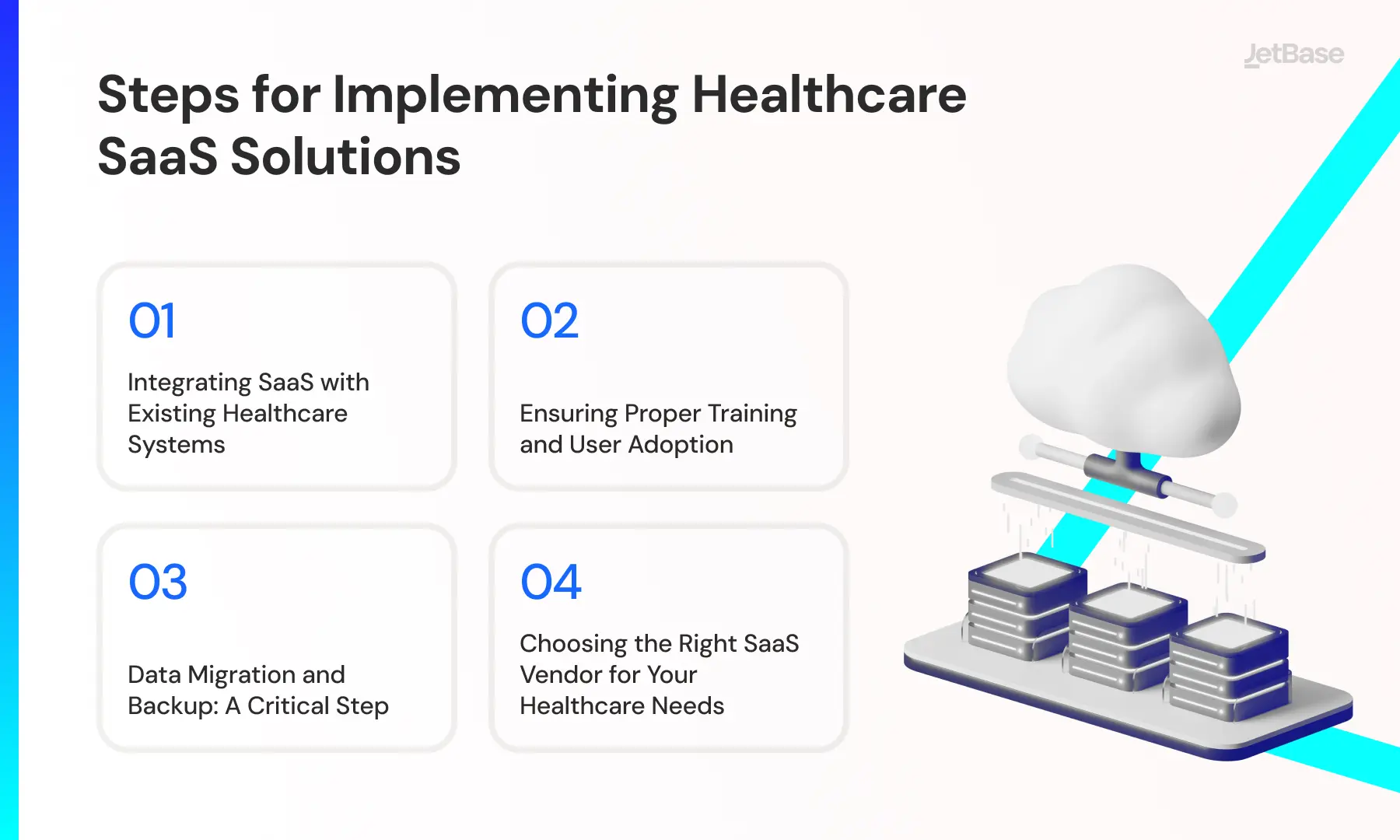
Now that you know what healthcare SaaS is and why it’s worth the investment, let’s discuss how it can be introduced into a healthcare company’s ecosystem. Taking things step by step will help showcase the finer points of this exciting change, so let’s use that method.
Integrating SaaS with Existing Healthcare Systems
Regardless of the specialty of your SaaS or how your own ecosystem is structured, the two need to be connected for SaaS to really bring you benefits. This means establishing pipelines that allow data sharing between the two sides, as well as keeping them in constant “dialogue.” So, changes that occur in your other software should be reflected in the SaaS and vice versa.
The key is to use APIs for quick and simple connectivity, guaranteeing a smooth integration. It’s also important to stress-test the system to ensure that the connection holds even during peak load and to check for any legacy software that may conflict with SaaS.
Ensuring Proper Training and User Adoption
As with any new tool, your healthcare SaaS will only deliver its numerous benefits if the company staff knows how to use it well. That means holding onboarding sessions where your employees get to understand the basics of the software and eventually grasp its intricacies. Such lessons ensure that nobody accidentally disrupts operations or misconfigures data streams, resulting in privacy breaches.
The same delicate approach can be useful when introducing the SaaS to your patients, if it’s the kind they should interface with. While some users may be reluctant to adopt a high-tech approach, your SaaS should offer enough benefits to convince them. Things like online consultations, the ability to easily renew prescriptions, and constant monitoring should be more than worth it. Focused adoption can even lead to lowered no-show rates of just 2%.
Data Migration and Backup: A Critical Step
Moving data to the cloud, which is inevitable when you start using SaaS, isn’t an instant process. Firstly, it requires checking your current database to confirm it’s standardized and contains no errors. Then, before you make any moves, back up that data for safety in case anything goes wrong during migration. Nothing should, of course, but better to overprotect than to lose valuable information.
Next, the actual migration process can be done as a whole or in parts, the latter being good if you want to keep your system operational while you make the move. However, it’s also understandably slower, which may be a negative for those seeking to migrate quickly. Regardless of your approach, though, it’s imperative that you audit the transfer as you go to confirm all data is moved correctly and remains intact upon arrival.
Choosing the Right SaaS Vendor for Your Healthcare Needs
There’s no shortage of companies selling healthcare SaaS or offering their cloud for infrastructure use. However, you can narrow down your choices by determining what your desired price range is, whether you want a generic SaaS or a custom one, and which cloud suits you best. JetBase will gladly help build a unique solution for you when it comes to custom vs regular.
As for the other points, most of the largest cloud providers will have good terms for businesses as they compete with each other and have to offer the same baseline. However, AWS is perhaps the most well-known cloud provider, and its reputation speaks for itself. It offers near-perfect uptime, vast resources, and good flexibility. We’ve used it in our own healthcare projects (remote patient monitoring solution for clinics, medical care app) to great effect.
However, if you want to make sure you’re picking the right vendor, we’d be happy to consult and provide deeper guidance on the matter.
Emerging Trends in Healthcare SaaS
Just like any software field, SaaS in medicine is constantly evolving, growing to be a better tool for healthcare companies. Here are just a few trends shaping this niche’s future and making it exciting.
Artificial Intelligence Enhancements in SaaS Solutions
There’s hardly any industry that AI hasn’t touched already, and healthcare SaaS is no exception. Using AI, companies can make their solutions provide better analytics and forecasting, more reliable automation, and stronger personalization. The latter is particularly important for customer-facing solutions where you can provide a more welcoming service.
The Growth of Telemedicine Integration
Telemedicine is a very promising direction for SaaS in healthcare as it makes professional medical help available to patients regardless of their location or possible contagious status. It also makes it easier for those with mobility issues to schedule consultations from the comfort of their homes. As audio and video conversion protocols get better, telemedicine becomes more and more viable.
The Role of Big Data and Predictive Analytics
Building expansive models based on real-life patients and their medical data can help medical businesses understand the spread of viral illnesses and speed up drug research. Predictive analytics make it easier to understand how patients behave and how to cover their needs better. Using these, hospitals will be able to process patients more efficiently while keeping them satisfied with the level of service.
Rising Importance of API Integration in SaaS
Applying APIs in healthcare SaaS makes the connection between various pieces of software faster and more straightforward, requiring no extra steps or logging in. It allows developers to set up extra features at a fraction of the cost, using APIs to pick precisely what your SaaS delivers. It also makes updates easier to deal with, as the API will automatically get you access to new features and the patched version of the software.
The Expansion of Personal Health Records (PHRs)
Digitizing PHRs and processing them via healthcare SaaS will allow hospitals to access this data more efficiently and use it for analytical purposes. This makes it possible to customize doctors’ approach to each patient based on their medical history. It also minimizes the possibility of medical errors stemming from a lack of information. Digital PHR integration into SaaS guarantees that doctors will always have the necessary patient data at hand.
Overcoming Common Challenges in Healthcare SaaS Adoption
Considering how powerful and varied medical SaaS can be, it’s not surprising that it comes with certain roadblocks. After all, it’s a major change to a company’s ecosystem and could be disruptive if not introduced correctly. Typically, healthcare businesses face issues with:
- Guaranteeing compliance and security
- Onboarding employees efficiently
- Negotiating favorable terms for their SaaS use
Addressing Data Privacy and Security Concerns
When using healthcare SaaS, some companies may be reluctant to trust a third-party provider with highly sensitive patient data, especially since it’s governed by strict laws. However, as we’ve said earlier, you simply need to implement reliable encryption and tight access controls. These will ensure that any concerns about security are alleviated with meaningful changes.
Managing Change: Staff Training and Engagement
Any new tool to work with will require some onboarding. Considering how complex SaaS can be, it needs a similar approach. Prepare some lessons to get employees acquainted with it and introduce it to patients. Everyone must understand what they can do with the software and how to do it. Plus, you will need to assign roles to manage workflows more easily and get the most out of your solution.
Handling Vendor Support and Service-Level Agreements
As you sign up with a vendor to get your healthcare SaaS, make sure to negotiate important aspects of the deal. How much storage you get, what kind of support, and ways to scale are all vital points for a business seeking new software. Besides, the agreement must include provisions for the initial integration and potential vendor change to avoid lock-in.
How Jetbase Can Help You with Building Healthcare SaaS Products
We have covered all you need to know about healthcare SaaS and the intricacies of working with it, as well as integrating it into your company. However, knowing the theoretical aspects is not the same as having years of practical experience, of course. JetBase has spent more than 10 years refining our skills in creating and maintaining medical software, and we’re here to help.
Using our knowledge of telemedicine and SaaS solutions, we can hone in on your needs and goals, building software that matches your company. We have gathered a team that prides itself on top-notch communication and insights, as well as technical skills. Any solution JetBase makes will be secure, scalable, and feature-rich, which is how we gained our reputation as a top vendor.
So, if you want healthcare SaaS done right and a team that will help integrate and maintain it, you’ve come to the right place. Send us a message now, and we can get started with a consultation.