

Software product development outsourcing is the backbone of many global industries, with the general outsourcing market estimated at $92.5 billion in 2024. Moreover, 66% of US companies are said to outsource at least one department, including IT ones. At this point, it’s just a common tool to gain an edge in a tight competition. But how to do it right?
Today’s guide will explore the state of software development outsourcing in 2026, including tips on selecting the right team, managing the project, and drafting a solid contract. Using JetBase’s own extensive experience in the field, we’ll make sure you’re fully informed.
What is Software Development Outsourcing?
Software development outsourcing involves hiring a third-party team or whole company to create software products for you, under oversight and guidance from your staff. It’s often used by companies that lack an internal development team with the right skills. However, it has several other key benefits, which we’ll now examine in more detail.
Why Should You Consider Outsourcing Software Development?
There are several reasons why many companies turn to outsourcing software development services, which aren’t always tied to cost or staff availability. Chief among them are:
- Global talent pool;
- Limitless team scaling;
- Cost/value proposition;
- Resource freeing;
- Flexibility;
- International collabs.
Access to Global Expertise and Innovation
When you outsource software development, you may end up working with a team from absolutely anywhere in the world, members using their local ideas and approaches. As a result, you’re never stuck in one gear, constantly being exposed to fresh methods and technologies. Not to mention being able to pick developers from a much, much wider talent pool.
Ability to Scale Resources Quickly
Sometimes ideas grow practically on their own, necessitating more resources to develop them fully. This would be a challenge for in-house projects, as hiring full-time employees is a lengthy and costly process. Thankfully, with outsourced software development, you can expand the team pretty much overnight, gaining new members.
Cost-Effective Solutions without Compromising Quality
Developers in many regions will have lower rates than you may expect, allowing you to accommodate truly skilled workers without any concerns about the final product. You will end up with a lower budget than you would have with an in-house team, while still getting top-notch work.
Freeing Internal Resources for Core Functions
While your software development outsourcing team is hard at work on the project, your internal staff can keep working on other tasks, including crucial daily processes. This way, you don’t have to pause any projects or rush resources away from them in case of a force majeure.
Flexibility in Scaling Development Efforts
As we already pointed out, you can easily expand the team to supplement more ambitious development. But it’s also important to mention that, should you find that a smaller group could do the job, you can just as easily shrink the team and the spending align with it.
Fostering Collaboration with Global Teams
Working with vendors worldwide enables you to become familiar with local markets and companies, which can lead to new partnerships in the future. Plus, understanding their culture and industries will help you expand internationally if that is something you seek.
| Outsourcing | In-House | |
|---|---|---|
| Access to a global talent pool | Easily source the best developers from any region | Predominantly reserved for onshore specialists, recruiting international talent takes too long |
| Limitless team scaling | Expand (or shrink) teams as necessary, depending on the collaboration model | Expand as necessary but with the caveat of long vetting, higher cost, and long-term commitment |
| Cost/value proposition | Traditionally lower rates with work quality dependent on vendor | Higher cost with guaranteed quality after in-house vetting |
| Resource freeing | While the external team does the work, your internal one can focus on other tasks | Employees have to be divided between the new project and ongoing daily processes |
| Flexibility | Depends on the contract, with some offering the ability to switch gears or change project specifics | Reassign staff as you see fit to new duties and projects |
Risks and Challenges of Software Development Outsourcing
Now that we’ve talked about some of the benefits of software development outsourcing, let’s address some of the difficulties that unprepared companies might face. These are:
- Finding the right partner;
- Keeping the scope in check;
- Focusing on security;
- Preventing blindside costs.
Identifying the Right Outsourcing Partner
Picking the wrong kind of team doesn’t just mean running into someone who’s misrepresented their actual skills. Sometimes it’s more about not feeling a match in terms of how they structure work and communication, slowing down the project. When you choose your software development outsourcing partner, do extensive interviews to ensure they’re the right fit.
Managing Project Scope and Expectations
With a large team at your disposal, it’s tempting to chase ambitious goals, but just because you can delegate the workload to external employees doesn’t mean you must push things to the maximum. Learn about their experience, review their portfolio, and align your plan with that reality if you want to keep the scope just right.
Mitigating Security and Data Privacy Risks
If you’re working with a good vendor, the risks are no higher than they would be if you were developing the software in-house. However, just to be sure, you can verify your software development outsourcing team’s work with your own experts. Additionally, include relevant clauses in the contract to ensure your vendor prioritizes security sufficiently.
Overcoming Hidden Costs in Outsourcing Contracts
Even some reputable vendors may include clauses in the contract that allow them to request additional financing or avoid financial responsibility for specific issues. Have your legal counsel review the contract carefully before signing to ensure that no such points are overlooked.
Software Development Outsourcing Models
Startup outsource software development is typically separated into three standard models, each of which has its own strengths and weaknesses. Let’s analyze them one by one.
Time and Materials Contract Model
This approach has the vendor tracking the time they spend working and the materials they use, in this case, the team resources. As a result, you only pay as much as the project demands and no more.
Pros
Suitable for simple projects with a well-defined scope, where you can accurately calculate the cost in advance with a minimal margin of error. Unlikely to face hidden fees or run into budget issues due to scope creep. In fact, flexibility is the name of the game here, as you can expand the project gradually.
Cons
Requires tight control to ensure everything is running on pace. Oversight on the time and material tracking may be required for first-time use and could cause tension. Not the cheapest option if the project demands long-term software development outsourcing.
Fixed-Price Contract Model
Each deliverable will come with a specific price tag that you see up front. Demands projects that are unlikely to shift and morph over the course of development.
Advantages
Clear understanding of the final cost with a plan laid out for all stages of development. Possibility of negotiating a favorable price up front.
Drawbacks
Pretty much a complete lack of flexibility with any real changes requiring a re-negotiation of the contract, and not guaranteed to be accepted by the vendor. No possibility of scaling or rerouting the project.
Dedicated Team Contract Model
Lastly, this type of startup outsource software development is a hybrid one, where you can rely on the services of a full team, sourced from the vendor. They can work alongside your own employees while retaining some modicum of independence.
Benefits
Rely on the vendor’s own management staff to work with the team while still being able to adjust their processes. Increase the scope and expand staff numbers, though within reason.
Limitations
Lack of direct, complete control may be insufficient for some companies and first-time partnerships. Scaling is not as high as with hiring developers with an augmentation model. May require input from in-house experts, taking them away from internal work.
| Model | Pros | Cons |
|---|---|---|
| Time and Materials | High flexibility, good for small-scope projects | Too expensive for long-term projects, requires a lot of oversight |
| Fixed-Price | Clear information on the cost, strict plan for development | Inflexible, prevents scaling and substantial changes |
| Dedicated Team | Retain control without having to be hands-on, scale, to a point | No ability to manage directly, scaling could be higher, could need in-house help too |
How to Build an Effective Outsourcing Strategy
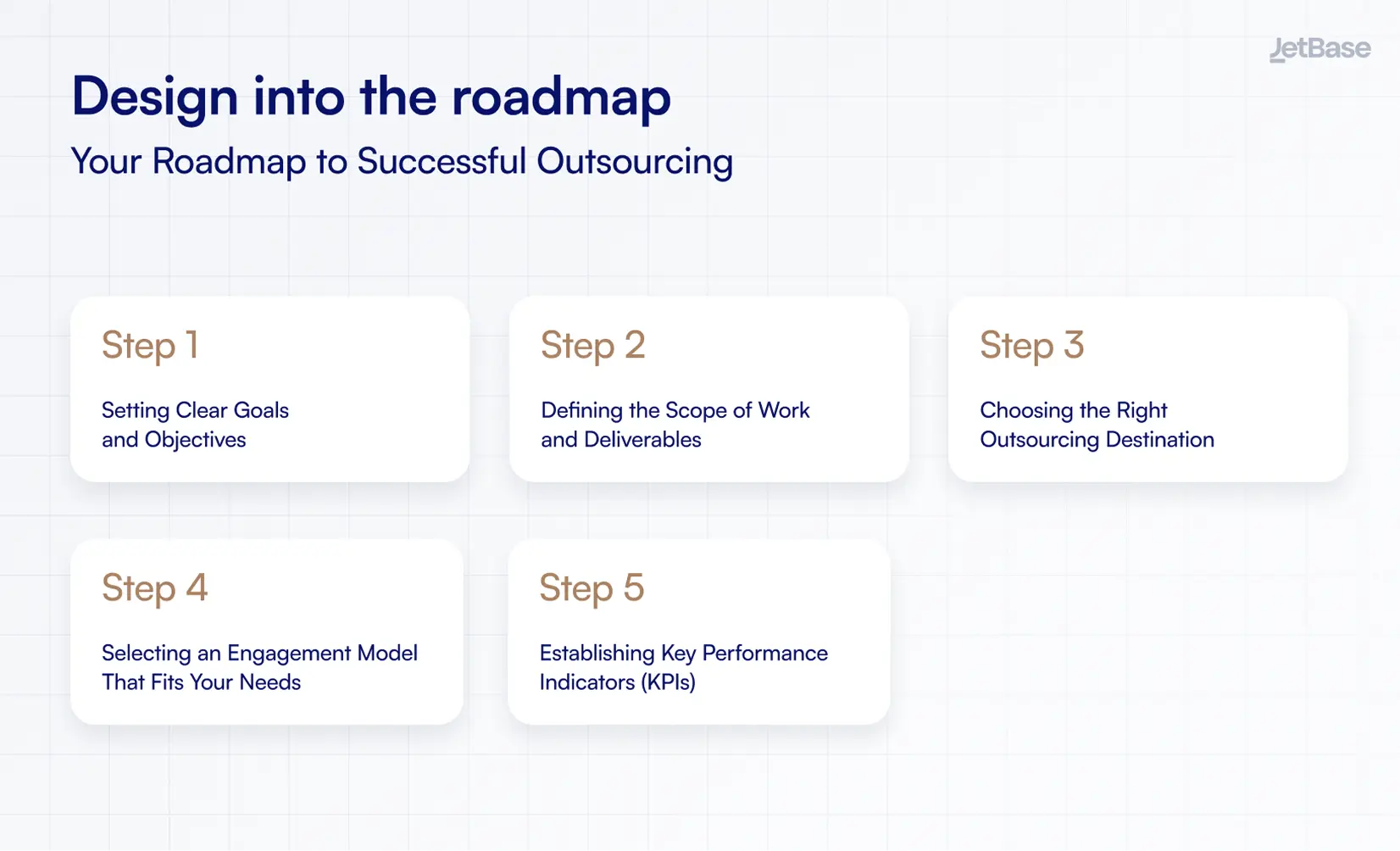
Even if you’ve chosen the best vendor for the job, you must also put in the effort to ensure your collaboration on outsourced software development is successful. After all, 81% of companies want “collaborators”, not just “vendors”. Here are some ways you can enhance the process and lay out a solid strategy for the project.
Setting Clear Goals and Objectives
We talk a lot about flexibility mattering when you outsource software development, but it’s important to remember that changes in the development process aren’t always easy. While you may have to adjust the scope or goals of your work, it’s best to have them set in stone from the start. This way, you will not only be able to build a plan for this software but also know whether you can afford to make any changes.
Defining the Scope of Work and Deliverables
Creating software isn’t a process of building a monolith, so break down the overall plan into smaller goals and agree on the deliverables with your vendor. This way, you will be able to gauge progress based on specific points in the outsourced software development. You’ll also have a chance to calculate the cost better if your model is based on the work done.
Choosing the Right Outsourcing Destination
Choosing the right outsourcing partner goes beyond comparing hourly rates or locations. What truly matters is finding a team that understands your goals, communicates clearly, and delivers consistent quality from day one.
At JetBase, we’ve built our processes around that idea combining the precision of European engineering with an agile, partnership-based approach that adapts to your business needs. Wherever you’re based, our team ensures smooth communication, aligned time zones, and measurable results.
Selecting an Engagement Model That Fits Your Needs
Our list of models includes the most common ones, but when preparing your project, take a look at all options to ensure you’ve found the optimal one. This isn’t just about saving money, as the wrong collaboration model may leave you understaffed or unable to adjust your project’s outcome.
Establishing Key Performance Indicators (KPIs)
How do you judge the performance of a team that may be located half a world away and under someone else’s supervision? Hard data to the rescue! Metrics like timeliness, proper reporting and logging, and code quality can all help assess whether your partners are delivering on their promises.
Software Development Process When Outsourcing
The actual process during outsourced software development differs from the typical work you’d do in-house. As you don’t have direct control over parts of the job, you only have to contend with four core stages.
Initial Consultation and Planning
While you will be handing over the reins to your vendor during development, this step is firmly under your control. You need to prepare documentation that thoroughly explains the goals of software development outsourcing and lays out the roadmap for the work. Consult with your team to determine the deliverables and communication methods, allowing you to retain some control.
Development Phases and Milestone Setting
Here, the outsource team gets to work, designing the UI/UX, creating an MVP, and generally bringing your idea to reality. Before that, though, you will set specific milestones that they must meet, allowing you to check in and assess the product’s quality. These “checkpoints” are necessary when you outsource software development so that you can course-correct if needed.
Quality Assurance and Testing Protocols
Agree beforehand on what kind of quality control you expect to be done before the launch of your software. At this stage, the outsource team will drill down, polishing their work, eliminating bugs, and testing the security of your software. This is a crucial step that ensures your product won’t let you down in a critical situation.
Deployment and Post-Deployment Support
As you outsource software development, you can also choose to recruit the same team to handle post-launch updates, providing new features and bug fixes. Meanwhile, it will be up to you to assess the results of the launch and determine whether the software meets your standards and is successful.
| Stage | Purpose |
|---|---|
| Initial consultation and planning | Lay out a thorough roadmap and set clear goals |
| Development | External team delivers work based on milestones you determine |
| QA and Testing | The product is polished to eliminate bugs and possible security gaps |
| Deployment and support | Product launched, analytics gathering, possible post-release updates |
Outsourcing Locations and How Much Does It Cost?
As mentioned above, selecting the right partner is one of the key factors to success in software development outsourcing. This doesn’t just mean picking the most experienced or cheapest team. Things like location matter just as much, and we’re about to show you why.
Cost Considerations by Region
Costs can vary significantly depending on where your vendor operates, but value isn’t just about saving money it’s about what you get in return.
While rates in North America and Western Europe often exceed $200/hour, Eastern Europe continues to stand out for offering top-tier software engineering at fair market prices, typically between $45–75/hour. Here, you get Western-level quality, solid communication, and cultural compatibility without the premium price tag.
| Region | Cost |
|---|---|
| Eastern Europe | $45-65/h |
| Southeast Asia | $22-35/h |
| South America | $40-60/h |
| China | $35-55/h |
| Africa | $15-35/h |
Regional Strengths and Weaknesses in Software Development
Another location-centric consideration in software development outsourcing lies in knowing what your region of choice can offer tech-wise. For example, Python is the world’s most popular language, which you can get from any region, but what about Ruby on Rails or Django?
Plus, consider how their work ethic and communication cultures will match up against yours. Siestas and societally accepted lateness aren’t a problem until you’re the one paying for them.
Understanding How Location Affects Service Pricing
Working with teams around the world for software development outsourcing will help you see how their cost propositions form. You can assess what a fair price is based on the cost of living in those regions, combined with the average salaries and contrasted with other rate offers. Plus, make sure you’re working with regions with stable currencies, where spikes of inflation won’t cause contract disputes or have you overpaying.
How to Choose the Right Software Development Vendor
Deciding who to outsource software development to is not a quick process, as you want a team that has:
- Relevant experience;
- Industry knowledge;
- Verified portfolio cases;
- High level of professionalism;
- Reasonable rates.
We covered the last point above, so let’s talk about the other four in relation to software development outsourcing.
Assessing Vendor Experience and Expertise
While a simple project to develop software for internal use in a warehouse, for example, may not require the world’s most skilled team, you still want someone with real knowledge. During consultations and calls with the vendor, test their team’s knowledge with theoretical or practical challenges. That way, you can be sure you outsource software development to experts.
Analyzing Industry-Specific Knowledge
For more complex work, such as projects that require an in-depth understanding of a specific industry, like medicine, finance, or education, you want a team that has experience working in that field. The reasoning is simple: they need to follow legal regulations, match the market’s needs, and avoid typical mistakes.
Assess their prior experience in your industry by reviewing their portfolio for relevant work and determining whether they specialize in a particular field. Some outsourcing companies specialize in just a few select industries, which makes them more qualified.
Checking Client Testimonials and Case Studies
Before you outsource software development to a team, make sure all of their impressive experiences and projects are verifiable. After all, nothing stops them from saying they had a big, successful project, while the client’s opinion may be quite the opposite. So, confirm that the testimonials are true and their case studies showcase real successes that match your own ambitions.
Evaluating Vendor Communication and Project Management Skills
No amount of skill can replace efficient management and professional communication. During your initial calls with the vendor, watch the manager’s manner with you and the team. If it seems like they’re talking over one another, struggling to agree on minor points, and generally being a little too casual, they might not be the best fit. You want to work on software development outsourcing with a team that approaches the job seriously.
Key Contractual Details in Outsourcing Agreements
Drawing up a contract when you outsource software development is the legal department’s job, but you must control the fine print to avoid any unpleasant surprises. While your partner is unlikely to cause any issues, especially if you vet them thoroughly, we still recommend doing your due diligence. Here’s how.
Essential Clauses to Include in an Outsourcing Contract
Contracts typically include standard wording and clauses that are common to any working arrangement. For example, you will need to agree on the termination terms, usually involving a 30-day notice. But, in addition to the time frame, you will also have to define obligations and conditions so that neither side can terminate the partnership without a substantial cause. In addition, consider the following clauses when you outsource software development:
- Dispute resolution methods;
- Service level agreements for quality standards;
- Liability limits;
- IP rights distinction;
- Outsourcing model definition.
| Clause | Purpose |
|---|---|
| Termination terms | Smooth dissolution of the partnership |
| SLAs for quality standards | Setting the quality bar to measure team performance |
| Dispute resolution methods | Being able to mediate any conflicts during development |
| Liability limits | Deciding who’s responsible for specific issues that arise and to what degree |
| IP rights | Determining who gets to retain control of the code and the finished product |
| Model definition | Agreeing on the general terms of outsourcing |
Payment Terms and Milestone-Based Agreements
A crucial part of your software development outsourcing contract is the negotiation of payment, which should cover the base fee, any included variable costs, as well as any agreed-upon fines. This will, ideally, prevent any pay disputes in the future. Also, make sure to define whatever milestones your project includes to be able to gauge progress within the legal framework.
Legal and Compliance Requirements
Speaking of legal, remember that your contract must include strict NDA terms, as well as provisions about retaining control over the final product and its code. Plus, if you’re operating in industries such as medicine and finance, you will need to request that the final product be compliant with any relevant regulations. It’s on your software development outsourcing partner to deliver.
Best Practices for Successful Software Development Outsourcing
In addition to finding the right partner and making a good contract, you can also just apply some smart strategies to ensure success in software development outsourcing.
Setting Up Effective Communication Channels
Staying in charge of software development outsourcing means staying in touch with the team. Decide early on which software you will use to communicate and how often mandatory meetings and reports should occur. These will let you catch up on the progress and determine next steps should anything deviate from the original plan, as it usually does.
Using Agile Methodologies for Better Project Control
Most modern teams already rely on Agile to run their projects, but if your vendor doesn’t, agree to establish this approach for your collaboration. Set short, easy-to-accomplish sprints, and then iterate on the work quickly to ensure you’re constantly progressing while also having a chance to do a little experimentation.
Ensuring Proper Documentation and Knowledge Sharing
Whether you intend to collaborate with your software development outsourcing partner on post-launch updates and support or not, all the work they do must be thoroughly documented. This will allow later team members and other employees to conveniently work on or update the software with no issues.
Regular Monitoring and Quality Assurance
You have to put your trust in your software development outsourcing collaborator, but that doesn’t mean you should be fully hands-off with the work. Use the team’s progress reports to track the project's progress and recruit your internal staff to verify the quality of the work.
The Most Common Misconceptions About Software Development Outsourcing
We’ve spent a while talking about the strengths of software development outsourcing and ways to make it work, but perhaps it’s important to address some apprehensions that people voice about the entire process. After all, in order to outsource development, you need to be sure it’s the right path to take. So, let’s lay any worries you may have to rest.
"Outsourcing Means Losing Control"
First off, some models of outsourcing, such as staff augmentation, let you retain 100% control over the project, disproving this blanket statement. However, even if we consider a model where you hand over the work entirely to an external team, you still retain control. Your contract will stipulate exactly what the vendor must do, how often to report to you, and what they are responsible for. Hard to argue this isn’t control, right?
"It’s All About Cost-Cutting"
We’ve largely debunked this misconception about software development outsourcing by pointing out its numerous strengths. Still, though, we should also point out that cost-cutting isn’t some dirty phrase, as smartly handling the budget and getting a quality product is the mark of a good business. Still, even if you aren’t looking to decrease expenses, outsourcing is great for engaging a worldwide pool of talent and gaining insight into international markets.
"Outsourcing Leads to Poor Quality"
If you follow JetBase’s guide and take care to select an outsourcing partner that matches your needs, this plainly won’t happen. After all, if a company makes good software, why would signing an outsourcing contract with it affect their work quality? The real culprit that results in this false impression is a lack of vetting that some do when hiring outsourcing firms.
"Freelancers Can Replace Established Outsourcing Firms"
Speaking of a lack of proper vetting, freelancers with non-existent portfolios and a lack of team cohesion can’t hope to be as good as proper software development outsourcing. While you can hire freelancers for one-off projects where they work solo, full-scale development requires a different tier of services.
Industry Trends in Software Development Outsourcing
In addition to dispelling myths about software development outsourcing, we want to show what this industry actually looks like in terms of growth. This will help illustrate how outsourcing is developing and changing, giving it new opportunities for the future.
Growth of Nearshoring in the Tech Industry
Nearshoring as a general practice has grown massively this decade, including software development outsourcing. This rise in popularity makes a lot of sense - as you work with vendors in neighboring countries, you can enjoy similar cultures, close time zones, and the ability to cut some of the cost of working with onshore teams.
Increasing Focus on Data Security and Privacy
A lot has been said about concerns of privacy and security in outsourcing, and we expect the next few years to be all about addressing these worries. As the industry relies on repeat customers and legitimate contracts, it’s in the vendors’ interest to provide ironclad security protocols. Therefore, good outsourcing companies are already offering more steps to guarantee your data privacy.
Adoption of AI and Automation in Development
Hiring a vendor to automate your internal processes and set up AI-based features in your ecosystem can be a game-changer. Thus, AI experts are becoming incredibly valuable in software development outsourcing, as their services can guarantee years of advantages. With an 80% increase in productivity, AI is a must-have for many businesses worldwide, and you don’t even need to have in-house experts to reap the benefits.
Multi-cloud Strategies Gaining Popularity
KPMG suggests that multi-cloud models can help reduce infrastructure expenses by up to 50%, providing an apparent reason to adopt this strategy. However, building such a complex environment and integrating it with all of your software and processes can be a challenge. Thus, outsourcing this work is the logical next step, maximizing savings and efficiency.
Should You Outsource Software Development in 2026?
The answer to this question relies entirely on whether or not your own employees can handle the work that you’d otherwise entrust to a software development outsourcing team. Unless you have a competent in-house department, outsourcing is a great opportunity for any company. It helps save money, work with high-skill professionals who wouldn’t otherwise be available to hire, and create software while your core team is otherwise busy.
So, yes, you should outsource, except in one specific case, in which you probably wouldn’t even be considering this question. With our in-depth guide’s help, you already know a lot about how to approach outsourcing correctly and pick a collaborator for years to come. However, if you want to clear up any other points or skip the long search and partner up with a skilled team, JetBase is here to help.
We’ve spent over a decade crafting custom solutions for companies in the SaaS, medicine, and e-commerce categories. Our team has spent years honing its collaborative abilities and establishing processes to ensure smooth communication and efficient product delivery. As a result, we’re one of the top outsourcing companies out there, so send us a message if you’re ready to start.